


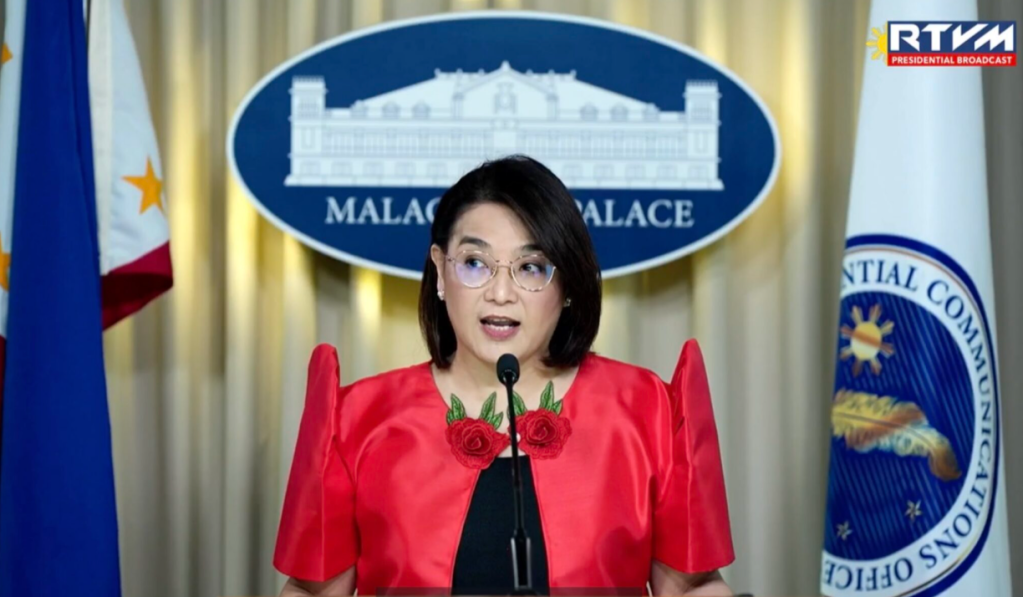
TOKYO, Japan — Weighing in on the intense legislative standoff that paralyzed the upper chamber, Malacañang has issued a sharp rebuke regarding the motives behind the dramatic rules dispute.The executive branch stated that the plenary walkout over remote participation rules reveals a stark divide between public duty and self-preservation.
The statement was delivered by Palace press officer Claire Castro during a press briefing held on the sidelines of President Ferdinand R. Marcos Jr.’s official state visit to Japan.
The Palace framed the procedural breakdown not merely as a debate over chamber guidelines, but as a critical reflection of political priorities under intense public scrutiny:
[ Palace Press Briefing: Tokyo, Japan ] ──► Responding to the Senate Minority Walkout │ ┌──────────────────────────────────────────┴──────────────────────────────────────────┐ ▼ ▼ [ THE COMPLIANCE CRITIQUE ] [ THE HISTORICAL CITATION ] "It turns out the rules are fine, and they just want Invoking General Antonio Luna's iconic ultimatum, to change them," Castro remarked, questioning the sudden the Palace asked whether lawmakers are actively working push to accommodate fugitive colleagues. "for the nation or for themselves" (*Bayan o sarili?*).
Malacañang’s criticism directly targets the underlying motivation for the rule change: a proposal introduced by Senator Rodante Marcoleta to permit virtual voting, which would primarily benefit fugitive Senator Ronald “Bato” dela Rosa. Dela Rosa, currently facing an active arrest warrant from the International Criminal Court (ICC), has remained in hiding after being granted “protective custody” by Senate President Alan Peter Cayetano.
During the briefing, Castro highlighted the contradiction in the arguments used by the new Senate leadership to justify bending standard physical attendance requirements.
                            [ MALACAÑANG DISCOURSE ANALYSIS ]
                                            │
         ┌──────────────────────────────────┴──────────────────────────────────┐
         ▼                                                                     ▼
   [ THE MAJORITY'S JUSTIFICATION ]                                      [ THE PUBLIC RATINGS ASSESSMENT ]
   • **Safety Claims Debunked:** Castro noted that the majority, led by   • **An Opportunity for Clarity:** The Palace characterized the
     Cayetano, has argued that Dela Rosa's physical absence is justified     chaotic walkout as a "good opportunity" for ordinary Filipino
     because the state cannot guarantee his security against an ICC arrest.  citizens to observe the true motivations of their elected leaders.
   • **Rules Manipulation:** The executive branch maintains that changing  • **Electoral Accountability:** Planners imply that voters will remember
     long-standing parliamentary protocols to shield a single individual     who prioritized institutional integrity versus who protected political
     compromises the basic credibility of the legislature.                  allies ahead of the upcoming midterms.
The Palace’s statement further inflates an already volatile political atmosphere in Manila. On Tuesday night, eleven minority senators—including Panfilo “Ping” Lacson, Francis “Kiko” Pangilinan, and Risa Hontiveros—physically vacated the session hall to protest what they called the majority’s attempt to “railroad” Marcoleta’s digital voting amendment without a properly constituted Committee on Rules.
| Government Stakeholder Group | Immediate Reaction To Standoff | Ultimate Tactical Outlook |
| The Senate Majority | Defends Rule 51, arguing a simple floor vote can instantly authorize electronic voting channels. | Determined to establish virtual parameters to keep their voting numbers intact despite active warrants. |
| The Executive Branch (Malacañang) | Publicly sides with procedural compliance and standard rule-of-law execution. | Maximizing the optics of the scandal to isolate lawmakers aligned with the previous administration’s controversial programs. |
By aligning itself with the minority’s stance that the “rules are fine” as they stand, the Marcos administration is sending a clear warning to the upper chamber. As long as the majority attempts to rewrite parliamentary procedures to accommodate members evading international legal mechanisms, Malacañang intends to leverage the public spotlight—forcing lawmakers to answer the ultimate question of whether they serve the republic or their own circles.