
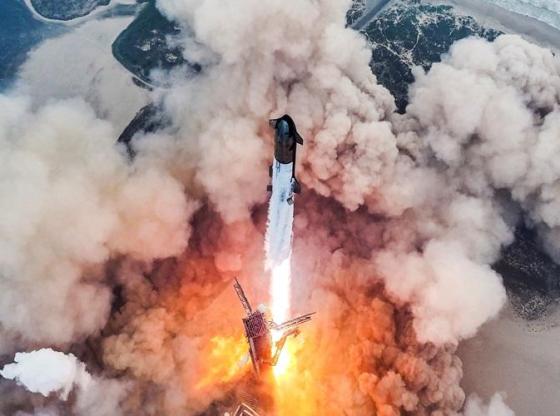

SpaceX’s Starship has achieved a major milestone, surviving a hypersonic return to Earth and successfully landing in the Indian Ocean on its fourth test flight. This accomplishment marks a significant advancement in SpaceX’s efforts to develop a reusable rocket capable of sending astronauts to the moon and beyond.
Key Highlights:
- Launch and Landing: Starship launched from Boca Chica, Texas, and completed a 65-minute mission, culminating in a controlled descent into the Indian Ocean.
- Previous Attempts: The first three test missions ended in explosions or disintegration, but the latest test demonstrated substantial progress.
- Rocket System: The nearly 400-foot tall Starship consists of an upper stage mounted on the Super Heavy booster, both designed to be reusable.
- Mission Details: After separating from the Super Heavy booster, which performed a soft splashdown in the Gulf of Mexico, Starship continued to space and then re-entered Earth’s atmosphere, showcasing its reusable design.
- Technical Challenges Overcome: Despite losing heat-shield tiles and sustaining damage to a steering flap, Starship managed to achieve a soft ocean landing.
- Future Plans: SpaceX plans at least six more Starship test flights this year and aims to use the rocket for NASA’s lunar missions by 2026.
Impact on Space Exploration: SpaceX’s Starship, envisioned to be more powerful and cost-effective than the Falcon 9, is central to NASA’s plans to return astronauts to the moon. This development places SpaceX in direct competition with China’s lunar ambitions, set for 2030. The success of Starship is crucial for future deep-space exploration and establishing a sustained human presence on the moon.
Challenges Ahead: Despite the progress, SpaceX’s journey with Starship faces numerous challenges, including ensuring crew safety and meeting ambitious launch schedules. The company’s commitment to rapid development has sparked concerns about worker safety in Texas and California, according to a Reuters investigation.
SpaceX continues to demonstrate its leadership in space technology, routinely flying astronauts to the International Space Station with its Crew Dragon capsule atop the Falcon 9 rocket. However, the goal of sending humans to the moon with Starship represents a new frontier that will require further testing and validation.