


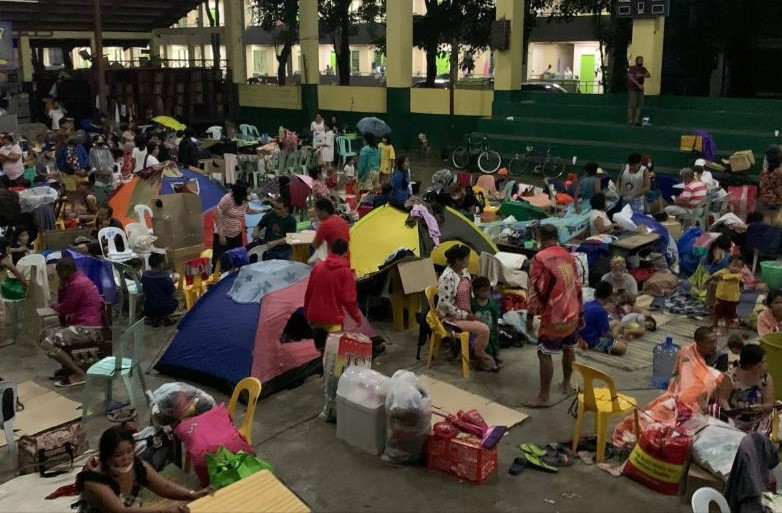
In a crowded evacuation centre in Quezon City, where scores of families are sheltering ahead of the storm, a quiet scene stood out—63‑year‑old Judy Bertuso carefully spooned porridge into the mouth of her husband Apollo, 65, who is recovering from a stroke. The tent they shelter in is one of many set up inside a basketball court reopened as an emergency centre.
Despite the loud hum of children playing, the distant howling wind and rows of tents crammed tightly together, the scene was striking for its calm intimacy: Judy moved deliberately, unhurriedly, her focus entirely on the care of her husband. It was a reminder that even in the midst of upheaval and uncertainty, the human bond remains.
Shelters like this are facing challenges—crowding, limited space, and shared facilities—even as local agencies work to manage evacuation operations. Amid these constraints, small acts of tenderness and everyday care are serving as a lifeline for many.