
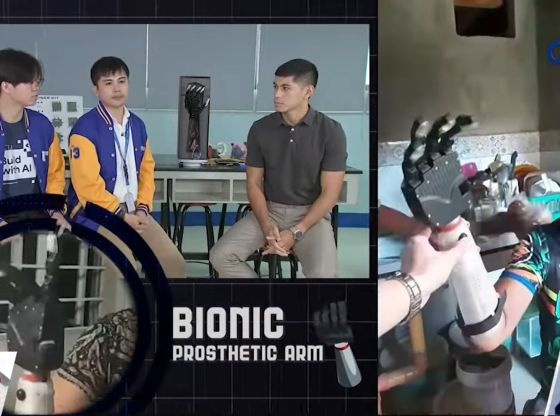

Two computer engineering students from STI College Ortigas-Cainta have developed an innovative bionic prosthetic arm aimed at helping individuals with limb differences. The project utilizes electromyography (EMG) sensors and machine learning to create a responsive prosthetic device, as reported by Martin Javier in 24 Oras on Friday.
The developers, Astro Sta. Ana and James Cenina, explained that the EMG sensors detect muscle signals from the wearer, which are then processed by a microcontroller to control the arm’s movements. This technology allows users to intuitively command the prosthetic.
Astro Sta. Ana reflected on the motivation behind the project, saying, “We felt it was hard to move during the pandemic. How much more difficult must it be for those with limb differences?”
In addition to basic functionality, the prosthetic arm addresses a common issue with existing devices: the lack of tactile feedback. Cenina explained that they incorporated force sensors on each finger, which cause the prosthetic to vibrate in response to the pressure exerted on objects. This helps users feel the strength of their grip.
The prosthetic arm, priced between ₱50,000 and ₱70,000, is significantly more affordable than traditional models, which can range from ₱500,000 to ₱1 million. The students’ project was recognized as the best thesis at their college, and they plan to patent the design.