
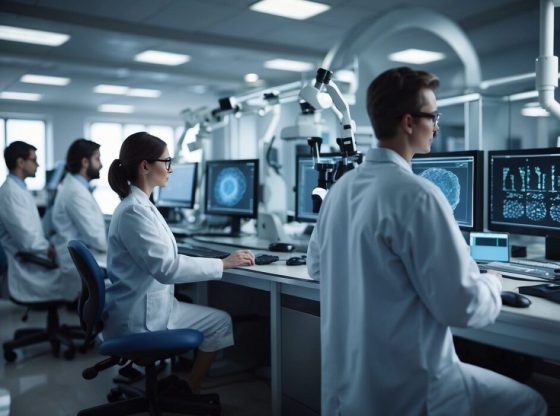

Early detection is crucial in the fight against cancer, significantly improving recovery chances and reducing the severity of treatments. Despite the importance of screening programs, many are slow to gain traction. However, artificial intelligence (AI) could revolutionize early detection, according to UK researchers. Through advanced training, AI might identify cancer at its earliest stages.
In 2022, cancer accounted for 20 million cases and 9.7 million deaths globally. The World Health Organization (WHO) projects that by 2050, new cases could surpass 35 million annually, a 77% increase from 2022.
While prevention remains vital, targeting risk factors like smoking, alcohol consumption, sedentary lifestyles, diet, and pollution, researchers are advancing in treatment and early diagnosis methods. AI stands out as a promising tool for early detection.
A recent study published by Oxford University Press in the journal Biology Methods & Protocols showcased the work of researchers from Cambridge University and Imperial College London. They trained AI to detect 13 cancer types, including breast, liver, lung, and prostate cancers, by analyzing DNA methylation patterns in non-cancerous tissues with a 98.2% accuracy rate. Identifying these patterns early could greatly enhance recovery rates.
Lead author Shamith Samarajiwa highlighted the potential of computational methods in improving early cancer detection and screening. However, the current model is based on tissue samples, necessitating further research on diverse biopsy samples for clinical application.
AI’s role in cancer detection isn’t new. In 2021, France’s Institut Curie developed a deep learning AI tool to sequence genes expressed in tumors, successfully detecting 79% of tested tumors. The EU’s PANCAIM project also developed an AI algorithm for early pancreatic cancer detection, and Swedish researchers recently demonstrated AI’s ability to assist radiologists in detecting breast cancer.
These advancements underscore AI’s potential in enhancing early diagnosis and treatment, ultimately improving patient survival rates. AI is not meant to replace healthcare professionals but to support them in providing timely and effective treatment.