
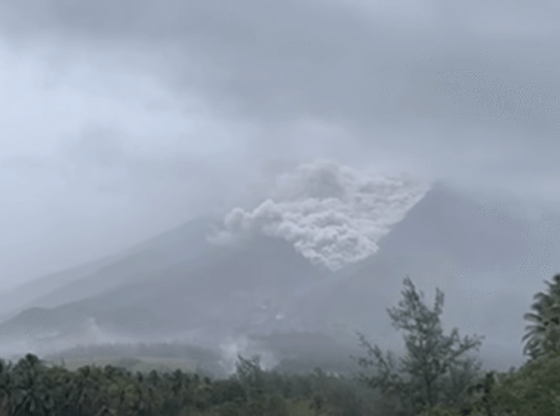

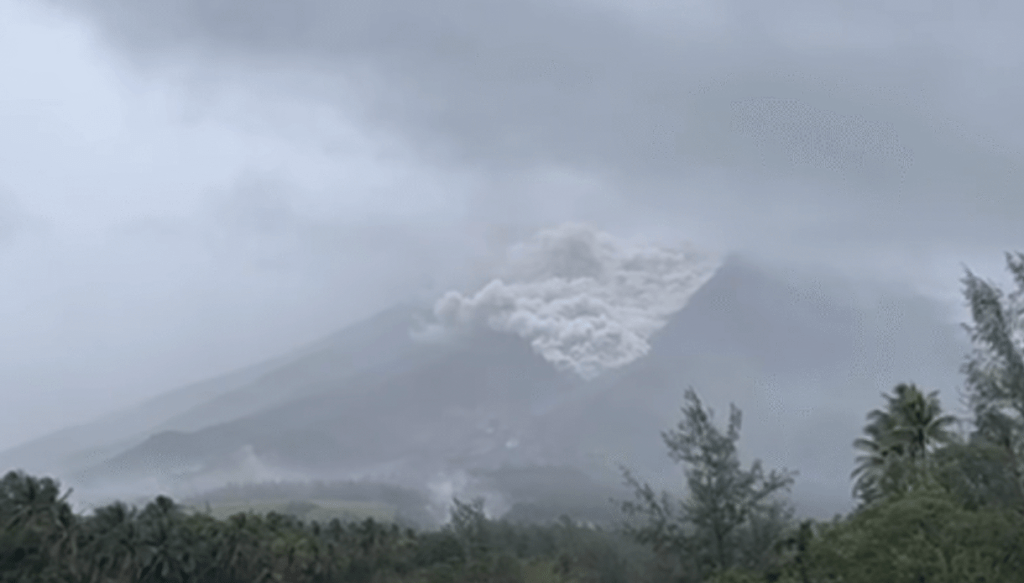
ALBAY, Philippines — Mayon Volcano remains under Alert Level 3 (Intensified Magmatic Unrest) as it continues to exhibit dangerous activity, including repeated pyroclastic density currents (PDCs) and significant ash emissions that have disrupted life for thousands of residents in the Bicol Region.
As of May 7, 2026, the Philippine Institute of Volcanology and Seismology (PHIVOLCS) warns that the volcano is in a state of effusive eruption, with unstable lava flows at the summit frequently collapsing and generating fast-moving “uson” (PDCs).
The volcano’s activity over the past few days has been characterized by a mix of seismic unrest and surface hazards:
- Pyroclastic Density Currents (PDCs): At least 17 PDCs were recorded in the last 24-hour observation period. These flows, consisting of superheated gas and volcanic debris, have reached up to 3.8 to 4 kilometers down the Mi-isi and Bonga gullies.
- Ash Emissions: “Lava collapse-fed” ash plumes have risen up to 1,000 meters above the crater. The drifting ash has reduced visibility to near zero in the municipalities of Camalig, Guinobatan, and Ligao City.
- Sulfur Dioxide (SO2): Degassing remains high, with emissions measured at approximately 1,829 tonnes per day, contributing to volcanic smog (vog) in the surrounding area.
- Lava Flow: Molten rock continues to slowly advance down the southwestern and southeastern slopes, maintaining a visible crater glow at night.
The persistent ashfall has created a growing humanitarian and health crisis in Albay:
- Displacement: Approximately 5,000 to 5,400 households remain displaced or severely affected. Around 1,500 families are currently staying in designated evacuation centers across Camalig, Malilipot, and Tabaco City.
- Health Concerns: Residents in Barangay Sua and Tumpa have reported symptoms of respiratory distress, including chest tightness and persistent coughing, due to the inhalation of fine volcanic particles.
- Agricultural Damage: Ash has buried rice and vegetable fields, with initial damage estimates for some individual farming families reaching up to ₱50,000. Livestock are also being moved to safer areas to avoid ash inhalation.
- Water Scarcity: Clearing operations are being hampered by a limited water supply, which is needed to flush thick layers of ash from provincial roads and residential rooftops.
PHIVOLCS and local government units (LGUs) maintain strict enforcement of safety protocols:
- 6-km PDZ: Entry into the 6-kilometer Permanent Danger Zone is strictly prohibited due to the threat of sudden explosions, rockfalls, and PDCs.
- Aviation Alert: The Civil Aviation Authority has issued a flight safety advisory, warning pilots to avoid flying near the volcano’s summit as ash can cause catastrophic engine failure.
- Health Protection: The Department of Health (DOH) advises residents to stay indoors, seal windows with damp cloths, and wear N95 masks if going outside is unavoidable.
Authorities are currently assessing whether to raise the status to Alert Level 4, which would necessitate the mandatory evacuation of an additional 10,000 to 13,000 residents within a 7-kilometer radius.