
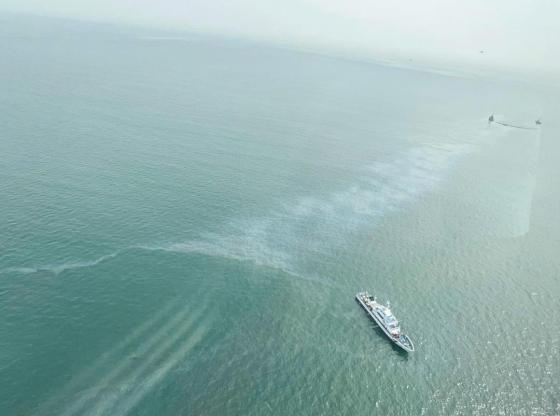

The Philippine Coast Guard (PCG) has reassured the public that the oil spill resulting from the sunken motor tanker MT Terra Nova off the coast of Bataan remains under control. The incident, which occurred early Thursday morning, has prompted swift action from various authorities to mitigate potential environmental impacts.
Incident Overview
The MT Terra Nova was en route from Bataan to Iloilo when it capsized approximately 3.6 nautical miles east of Limay town at around 1:10 a.m. The unfortunate accident resulted in the death of one crew member and an oil spill, raising concerns about environmental and health impacts on nearby areas.
Current Status and Response
Rear Admiral Armand Balilo, spokesperson for the PCG, provided an update during a press conference, stating, “The amount of oil is minimal and remains manageable. Hopefully, it will stay like that until we can start siphoning tomorrow.” He further assured that the tanker’s oil tank is still intact, emphasizing that the situation has not yet escalated to an alarming level.
The PCG is set to begin siphoning operations to extract the remaining oil from the tanker as soon as possible. “Siphoning must start tomorrow and it must start as soon as possible to prevent the spread of oil,” Balilo explained. The operation is projected to take seven days, as per the timeline provided by the responsible company.
Environmental Concerns
Environment Secretary Maria Antonia Yulo-Loyzaga expressed caution regarding the potential wider impact of the spill. She indicated that the spill might affect not only Bataan but also neighboring regions such as Bulacan, Pampanga, and Cavite, particularly the wetlands and coastline areas. “We are on the lookout now for the possible contamination that could happen in the wetlands and the coastline areas not just of Bataan, but we are also looking at Bulacan, and we are also looking at Pampanga, possibly Cavite because of Corregidor,” Yulo-Loyzaga stated.
Preventative Measures
In response to the spill, the PCG has initiated oil collection efforts and placed booms to contain the spread of the oil. These preventative measures are crucial to minimize environmental damage and protect marine life and coastal ecosystems.
Health Advisory
The Department of Health (DOH) has issued a health advisory for residents in the affected areas. Exposure to oil spills can have serious health implications, including respiratory issues and skin irritation. The DOH advises residents to avoid direct contact with contaminated water and to seek medical attention if they experience any health symptoms related to the spill.
Community and Government Response
Local government units (LGUs) in the potentially affected areas are coordinating closely with national agencies to monitor the situation and implement necessary measures. Community engagement is also critical, as residents and local organizations can play a significant role in reporting sightings of oil and participating in cleanup efforts.
Importance of Timely Action
The timely commencement of siphoning operations is crucial in preventing further environmental damage. The PCG’s preparedness and quick response have been commendable, yet continuous monitoring and adaptive strategies are essential to address any unforeseen developments.
Broader Implications
The incident underscores the importance of stringent safety protocols for maritime operations, particularly for vessels transporting hazardous materials. Regular inspections, maintenance, and crew training are vital components in preventing such accidents.
Environmental Advocacy and Policy
Environmental advocates are calling for stricter regulations and more robust response mechanisms to handle oil spills. The Bataan incident serves as a reminder of the delicate balance between industrial activities and environmental stewardship. Policy improvements and enhanced cooperation between government agencies, private companies, and civil society are necessary to safeguard the environment.
Looking Ahead
As the PCG and other relevant authorities continue their efforts to manage the spill, the focus remains on minimizing ecological damage and protecting public health. The collective response to the MT Terra Nova incident will provide valuable lessons for future maritime safety and environmental protection strategies.
Community Resilience
The resilience of the affected communities will be tested in the coming days. Support from government agencies, environmental organizations, and local leaders will be crucial in helping these communities cope with the aftermath of the spill. Continued vigilance and proactive measures are essential to ensure the long-term health and safety of both the environment and the residents.
Conclusion
While the Bataan oil spill presents significant challenges, the response by the Philippine Coast Guard and other agencies demonstrates a commitment to managing the situation effectively. With ongoing efforts to contain and siphon the oil, there is hope that the environmental impact will be minimized, and lessons learned will lead to better preparedness and prevention strategies in the future.