

As the dawn broke on Easter Sunday, April 5, 2026, towns across the province of Bohol erupted in celebration, marking the Resurrection of Christ through the colorful and dramatic “hugos” or “sugat” (Salubong) ritual.
Combining theatrical flair with deep-seated Catholic devotion, the hugos—a term referring to the act of “hoisting down” from a high plane—re-enacts the symbolic meeting between the Risen Christ and his grieving mother, the Blessed Virgin Mary.
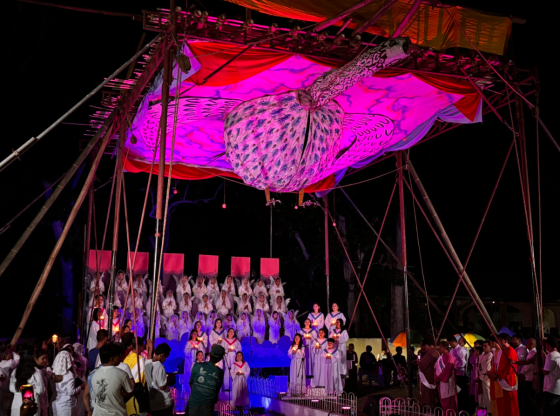
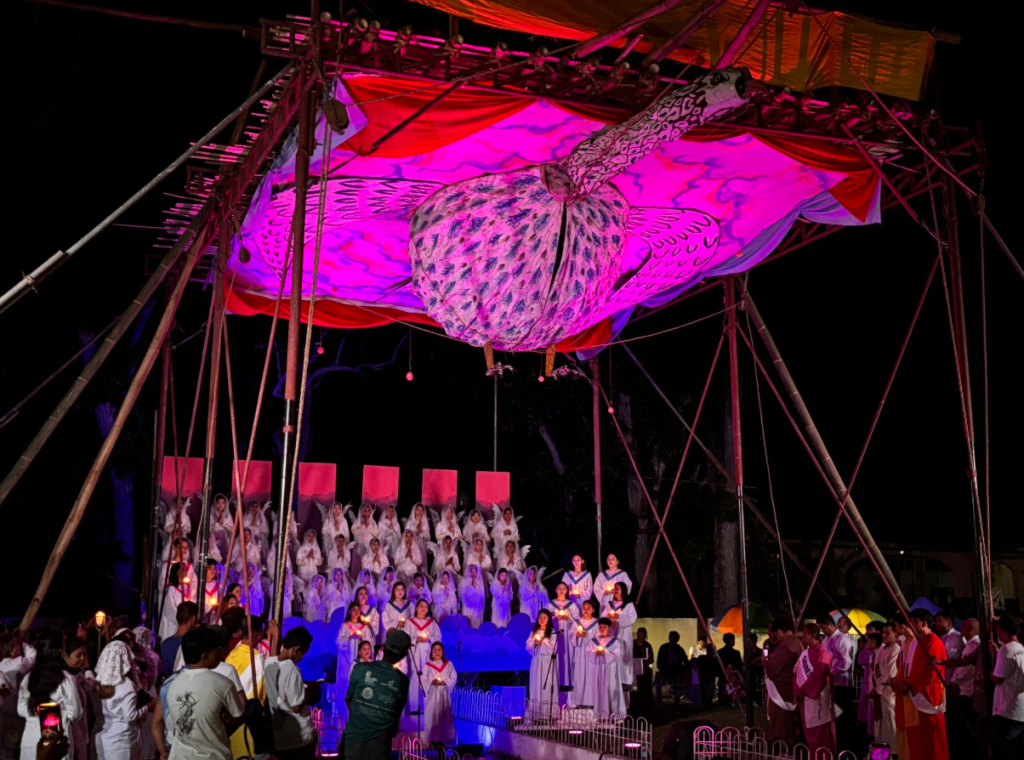
In the town of Loay, the Holy Trinity Parish Church hosted one of the most elaborate versions of the tradition. This year’s centerpiece was a giant pelican with a mechanical belly, suspended 20 feet above the church square.
- The Symbolism: Drawing from ancient legends of a mother pelican wounding herself to feed her young, the bird serves as a powerful metaphor for Christ’s sacrifice.
- The Reveal: Amid recorded bird sounds and falling confetti, the pelican’s belly opened to reveal two young “angels” who were lowered toward the images of Christ and Mary.
- The Climax: 11-year-old Aemmy Aiesha Ampoloquio sang as she removed Mary’s black veil of mourning, while 8-year-old Heracleo Amba placed a crown on the Virgin’s head, signaling her joy as the Queen of Heaven.
The hugos is a cornerstone of Boholano heritage, with each town adding its unique cultural signature to the event:
- Baclayon: Large crowds gathered at the Immaculate Conception Parish Church, where the sugat was followed by the traditional symbolic burning of a Judas effigy.
- Loboc: Known for its musical heritage, the ritual featured the world-renowned Loboc Children’s Choir, providing a celestial soundtrack as an angel sang the “Regina Coeli” while suspended mid-air.
- Tagbilaran City: At the St. Joseph the Worker Cathedral Shrine, the “Sugat sa Tungang Gabii” (Midnight Encounter) drew thousands of residents, emphasizing themes of “true love that never dies.”
The hugos is more than a religious play; it is a massive community effort. Preparation often begins as early as Christmas, with local families volunteering to support the “main angels” and the Loboc Brass Band providing the processional music.
Despite the intense summer heat and the backdrop of a national energy emergency, the spirit of Easter in Bohol remained undampened. Local officials noted that these traditions are vital for the province’s post-pandemic cultural recovery and continue to serve as a major draw for domestic and international pilgrims.