


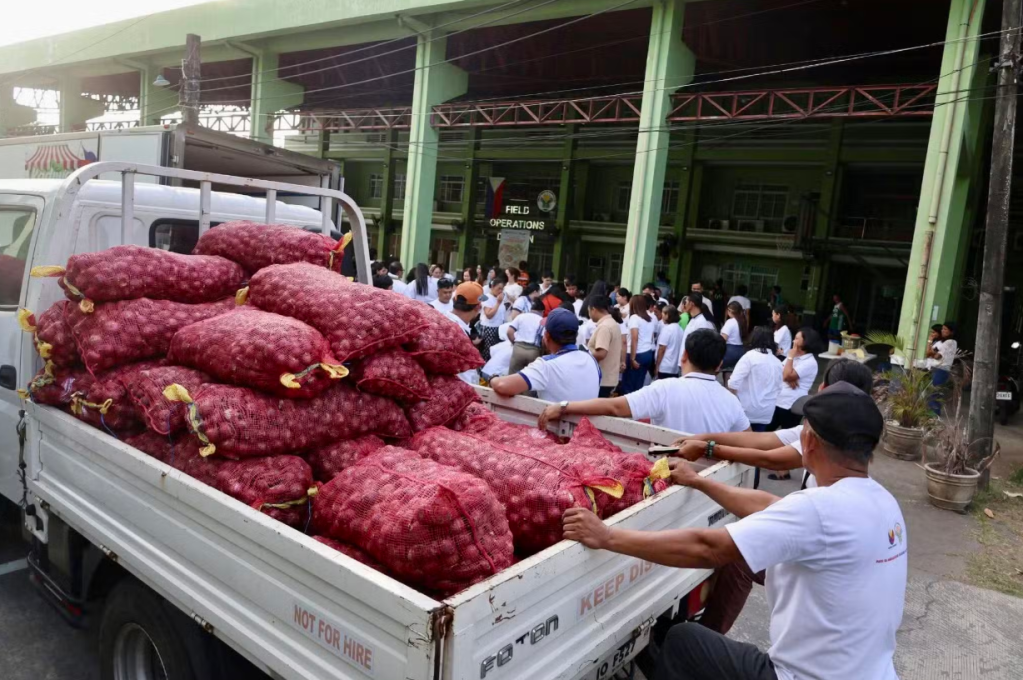
LEGAZPI CITY, Philippines — In a direct move to counter the soaring costs of logistics, the Department of Agriculture (DA) has launched a specialized “Kadiwa” initiative, bringing Mindoro-grown onions to Bicolanos at the significantly discounted price of ₱50 per kilogram.
The intervention comes as the national energy emergency continues to drive up transportation expenses, often causing price spikes for agricultural goods as they move between islands. By bypassing traditional middlemen and subsidizing transport, the DA is ensuring that both producers and consumers find relief.
The rollout in the Bicol Region is part of a broader strategy to stabilize food prices during the current global oil volatility:
- The Price Gap: While commercial market prices for onions have fluctuated due to higher trucking and shipping costs, the DA’s ₱50/kg rate offers a nearly 30-40% discount compared to some retail outlets.
- Strategic Sourcing: The onions are sourced directly from farmers in Mindoro, a major production hub, and transported to Bicol via DA-funded logistics networks.
- Volume and Reach: Thousands of kilograms have been earmarked for the region, with pop-up Kadiwa centers established in key cities like Legazpi, Naga, and Sorsogon.
Agriculture officials noted that the Bicol Region is particularly sensitive to fuel price adjustments because it relies heavily on inter-island and long-haul trucking for its supply of highland and lowland vegetables.
“Our goal is to ensure that the fuel crisis does not translate into a food crisis,” a regional DA representative stated. “By bringing Mindoro’s harvest directly to Bicol, we absorb the logistics cost so the public doesn’t have to.”
This localized sale coincides with the national rollout of the ₱10-billion cash assistance for farmers and fisherfolk, reflecting a two-pronged approach by the agency:
- Direct Aid: Providing cash to producers to keep farms running.
- Market Access: Providing affordable goods to consumers to keep inflation in check.
The DA plans to expand these “inter-regional commodity transfers” to include other high-demand products like garlic and potatoes. As long as the state of national energy emergency persists, these mobile markets will serve as a critical buffer for Filipino households, proving that even in a period of high costs, farm-to-table solutions can bridge the gap.