


MANILA, Philippines — Malacañang has formally declined requests for the release of President Ferdinand Marcos Jr.’s medical records and dismissed calls for him to undergo a hair follicle drug test, citing established Supreme Court jurisprudence.
The refusal follows a petition filed on April 10, 2026, by the United People’s Initiative (UPI), a group led by retired military generals, which urged the high tribunal to compel the disclosure of the President’s “true state of health” and mandate a drug test to prove his fitness for office.
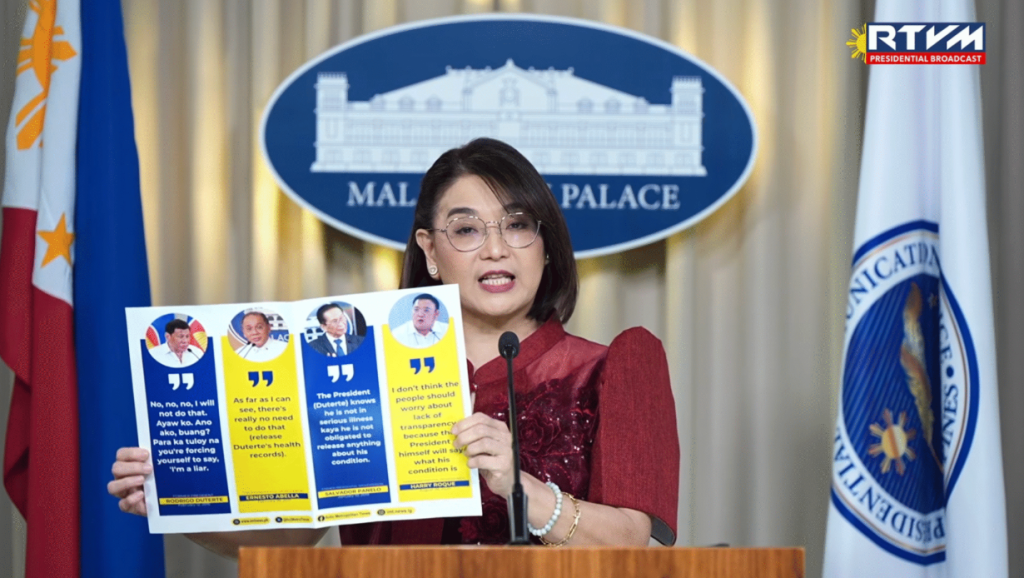
Palace press officer Claire Castro addressed the issue during a Wednesday briefing, stating that there is no legal basis to force such disclosures in the absence of evidence of a “serious illness.”
- SC Precedent: The Palace cited a May 2020 Supreme Court ruling (G.R. No. 252118) that protected former President Rodrigo Duterte from similar petitions. The court then ruled that medical records are private unless a “serious illness” is substantiated.
- Constitutional Clause: While Section 12, Article VII of the 1987 Constitution mandates public disclosure in cases of serious illness, Castro emphasized that the current claims are based on “surmises and conjectures.”
- “Pure Shenanigans”: President Marcos himself recently brushed off the rumors, even performing jumping jacks and jogging within the Malacañang compound on Monday to demonstrate his physical capability to reporters.
The UPI, led by retired PAF General Romeo Poquiz, argued that transparency is a “constitutional imperative” during times of national uncertainty.
- Health Concerns: Petitioners claimed the President appeared “skin-and-bones thin” during recent public appearances, specifically at the Araw ng Kagitingan commemoration.
- Drug Test Request: The group sought a non-invasive hair follicle test to address long-standing, unproven rumors regarding substance use.
- Hearsay Evidence: Malacañang countered that the petition relies on news articles and social media rumors, which the Supreme Court previously labeled as “hearsay evidence… without any probative value.”
The administration has taken a firm stance against what it calls a “coordinated disinformation campaign.”
- Hospitalization Context: Malacañang clarified that while the President was admitted for diverticulitis in January, he had fully recovered by February. He currently manages only hypertension and gout with maintenance medicine.
- Legal Action: The Presidential Communications Office (PCO) announced it would file complaints before the Department of Justice against individuals allegedly peddling “fake news” about the President’s health.
- Political Undertones: Officials suggested the timing of the petition is linked to ongoing political friction between the current administration and supporters of the Duterte family.
“Are we not transparent enough?” Castro asked reporters. “You have seen the President working face-to-face. Unless they can prove a serious illness, there is no need for the President to release his medical records.” For now, the “jumping jacks” defense remains the administration’s primary response to those questioning the Commander-in-Chief’s stamina.