
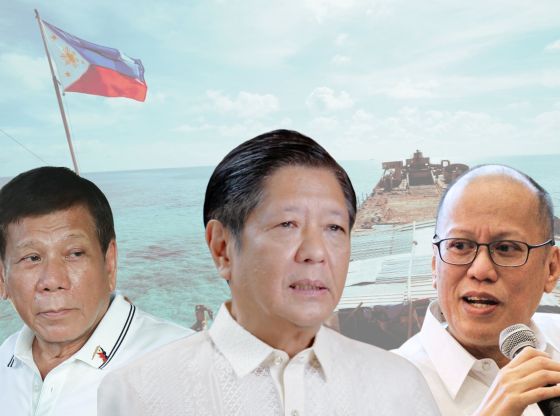

The Philippines marked the 8th anniversary of its landmark victory against China at the international arbitration tribunal in The Hague. The 2016 ruling favored Manila, rejecting China’s claim over the South China Sea, stating it had “no legal basis.” Despite this, China remains aggressive in asserting its claims in the region, sometimes resulting in injuries to Filipinos.
Brief History
Ferdinand Marcos Sr. (1965-1986)
The Philippines and China established diplomatic relations in 1975 during Marcos Sr.’s presidency. The two countries agreed to settle disputes peacefully, without force. Marcos Sr. declared the Kalayaan Group of Islands as part of Philippine territory in 1978 and established the Cabinet Committee on the Law of the Sea in 1981 to oversee the implementation of maritime treaties.
Corazon Aquino (1986-1992)
During her 1988 state visit to Beijing, Aquino emphasized mutual respect for sovereignty and peaceful dispute resolution. She reconstituted the Cabinet Committee on the Law of the Sea to prepare for negotiations regarding the country’s exclusive economic zone (EEZ).
Fidel Ramos (1992-1998)
In 1995, the Ramos administration protested China’s construction on Mischief Reef within the Philippine EEZ, bolstering Philippine forces in the area. A joint statement later agreed on peaceful dispute resolution.
Joseph Estrada (1998-2001)
Estrada grounded the BRP Sierra Madre at the Panatag Shoal in 1999 to assert Philippine sovereignty, turning it into a military outpost. Despite claims of an agreement to remove the ship, former Defense Secretary Orly Mercado refuted such promises.
Gloria Macapagal-Arroyo (2001-2010)
Arroyo’s administration sought diplomatic relations with China, including a joint oil exploration agreement in the South China Sea in 2005. However, the Supreme Court later declared the deal unconstitutional in 2023. Despite this, China remains interested in future joint explorations.
Benigno Aquino III (2010-2016)
Aquino III took a firm stance against China’s claims, filing an arbitration case in 2013 following a standoff at Scarborough Shoal. The Hague tribunal ruled in favor of the Philippines in 2016, rejecting China’s historical claims, but Beijing never recognized the decision.
Rodrigo Duterte (2016-2022)
Duterte shifted foreign policy towards China, reopening negotiations in 2016. Despite threatening military action in 2019, Duterte often downplayed the arbitration victory, describing it as “just a piece of paper.” He later insisted that any agreements with China were meant to maintain peace.
Ferdinand Marcos Jr. (2022-Present)
Marcos Jr. has strengthened defense ties with the United States and Japan, including new sites under the Enhanced Defense Cooperation Agreement and an upcoming reciprocal access deal. He criticized Duterte’s supposed agreement with China regarding the BRP Sierra Madre. Despite ordering the AFP to deescalate tensions, Marcos Jr. has demanded compensation from China for damages caused during a June 2024 incident.