
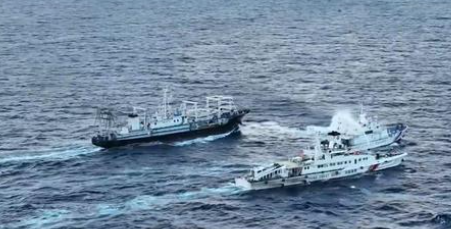

The ongoing tensions in the South China Sea have led to recent developments in diplomatic relations between China and the Philippines. China’s foreign ministry declared its readiness to engage in dialogue with the Philippines, responding to comments made by Philippine President Ferdinand Marcos Jr. about the bilateral ties between the two countries. Despite the Philippines being blamed for recent developments in the South China Sea, China emphasized that the relationship between the two nations was not solely based on disputes. Ministry spokesperson Wang Wenbin affirmed China’s willingness to manage differences through dialogue and consultation, stating that China would not close the door to dialogue with the Philippines.
President Marcos Jr., in a statement released during his visit to Japan for a summit with the Association of Southeast Asian nations (ASEAN), expressed the need for a “paradigm shift” in how the Philippines handles the South China Sea issue. He noted that traditional diplomatic efforts with China had yielded little progress over the years and emphasized the importance of avoiding violent conflict. Marcos Jr. also mentioned his intention to continue discussions with international partners to develop a joint position regarding the responsibilities in the West Philippines Sea, the term used by the Philippines for parts of the South China Sea within its exclusive economic zone.
The South China Sea is a strategically significant and heavily contested area, with over $3 trillion in ship-borne commerce passing through it annually. Besides the Philippines and China, ASEAN members Vietnam, Malaysia, and Brunei also have overlapping claims in this region. The Permanent Court of Arbitration in 2016 ruled that China’s claims in the South China Sea had no legal basis, a decision supported by the United States but rejected by Beijing. This complex geopolitical situation underscores the challenges of achieving resolution and maintaining peace in the region.