
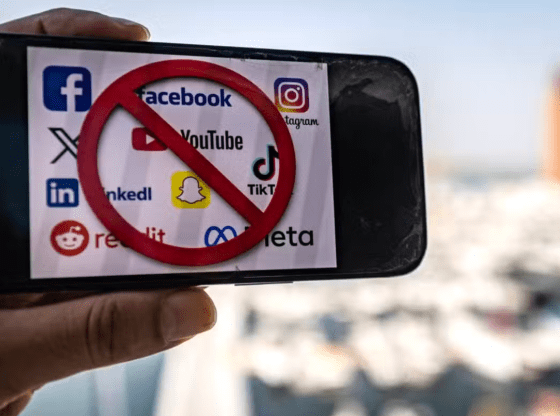


MANILA, Philippines — Issuing an urgent collective wake-up call to parents and digital platform developers alike, prominent medical organizations have stepped forward to address an escalating pediatric public health crisis. Leading developmental and medical experts have issued a strict joint advisory against unsupervised social media consumption among children and adolescents aged 16 years old and below.
The medical prescription warns that the unchecked, addictive nature of modern digital spaces introduces profound, long-term risks to a child’s neurological development and psychosocial well-being.
The formal advisory was spearheaded by a joint position statement from the Philippine Pediatric Society (PPS) and heavily reinforced by the Philippine Society for Developmental and Behavioral Pediatrics (PSDBP). Members of both organizations confirmed they are actively diagnosing and clinical managing a sharp increase in behavioral disruptions, chronic sleep issues, and severe anxiety directly stemming from unregulated screen exposure.
For families navigating the digital age, the medical groups established a clear, non-negotiable standard:
                            [ THE PPS-PSDBP DIGITAL ACCESS MANDATE ]
                                               │
         ┌─────────────────────────────────────┴─────────────────────────────────────┐
         ▼                                                                           ▼
   [ INDEPENDENT PROFILING BAN ]                                               [ ACTIVE CO-MANAGEMENT ]
 • **The Age Threshold:** Children **16 and below** should be strictly• **Guardian Oversight:** If access is granted, accounts must be
   barred from creating, maintaining, or using individual social       • fully co-managed by an adult with transparent device boundary
   media profiles independently.                                       • limits.
 • **Developmental Vulnerability:** Younger users are highly vulnerable• **Safety-By-Design:** The groups called on platforms to enforce
   to highly stimulating, attention-capturing, and commercially       • structural child safety standards, built-in minor protections,
   driven algorithms because emotional systems mature faster than      • and completely disable features that monetize youth engagement.
   prefrontal impulse controls.                                        • **Holistic Screening:** Maturity, caregiver supervision quality,
                                                                       • and psychosocial resilience should dictate access—not age alone.
The pediatric organizations clarified that their strict guidelines are designed to protect children from sophisticated online threats. Unmonitored feeds and open messaging channels actively leave minors exposed to hostile digital environments:
[ THE DIGITAL SURVEILLANCE RISK MATRIX ] │ ▼[ Predator Activity ]──► Online predators systematically mask their true identities, disguising themselves as fellow children to seamlessly build trust and exploit young users. │ ▼[ Structural Harm ] ──► The open-access nature of mainstream applications significantly amplifies the risk of aggressive cyberbullying, grooming, and exposure to explicit content. │ ▼[ Double-Edged Sword]──► While the PPS explicitly recognizes that digital platforms provide concrete benefits for learning and communication, these benefits are completely neutralized without parental guardrails.
The medical consensus heavily strengthens an active legislative campaign in Congress to regulate corporate tech ecosystems. In the Senate, Senator Sherwin Gatchalian’s Senate Bill No. 2066 (the Social Media Safety for Children Act) seeks to legally prohibit minors under 16 from maintaining social media accounts, mandating that tech providers implement rigorous age and identity verification systems.
Parallel legislative pushes include Senate Bill No. 40 by Senator Panfilo Lacson—which proposes an access restriction for all minors under 18—and House Bill No. 7714 (the Social Media Regulation and Protection Act) filed by Misamis Oriental Rep. Jennifer Lagbas to protect children under 13. By formally shifting the baseline responsibility from passive corporate policies to strict “safety-by-design” frameworks and active parent-led co-management, the medical community aims to build an effective psychological shield that allows children to grow up safe from algorithmic exploitation.