


MANILA – District engineers of the Department of Public Works and Highways (DPWH) have been granted excessive authority over public fund disbursements for infrastructure projects, creating systemic vulnerabilities that allegedly enabled unchecked kickback schemes in the controversial flood control initiatives. This stark observation emerged during the Independent Commission for Infrastructure’s (ICI) inaugural livestreamed hearing on Tuesday, where experts highlighted how the centralized payment system empowers individual engineers to control funding releases without adequate oversight, fueling widespread graft concerns.
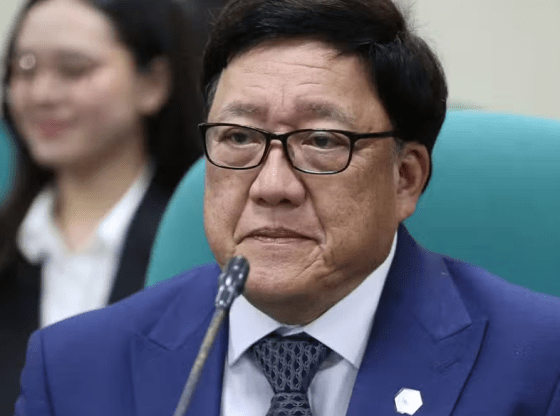
The critique surfaced as ICI Chair Andres Reyes Jr., a former Supreme Court justice, grilled resource persons from the Land Bank of the Philippines (LandBank) on the agency’s role in the disbursement process. Reyes pointed to the List of Due and Demandable Accounts Payable and Advised Debit Account (LDDAP-ADA) mechanism, in place since 1990 and digitized by 2013, which allows DPWH district engineers – as the highest-ranking signatories – to initiate electronic transfers to contractors via Notices of Transfer Allocation (NTAs). “There was too much power given to the district engineer,” Reyes emphasized. “He could ask for the funds, and he’s the one who issues the check. So he controls everything.”
LandBank President and CEO Lynette Ortiz acknowledged the system’s reliance on the engineers’ signatures for verification, including checks on authorized officials and “hash totals” for data integrity, completed within 24 to 48 hours. However, she stressed there were “no red flags” in the process, rooted in a “presumption of regularity” for government funds. This drew sharp rebuke from ICI Commissioner Rogelio Singson, a former DPWH secretary under President Benigno Aquino III. “My head hurts hearing that [presumption of regularity]. Everything is assumed regular,” Singson retorted. “That’s why this thing happened.”
The hearing, part of a broader ICI investigation into corruption in flood control and other infrastructure projects over the past decade, exposed how the lack of independent audits – even from the Commission on Audit (COA) – at the implementation stage allows tranche payments to proceed unchecked. Funds are released progressively as projects advance, but without real-time scrutiny, opportunities for anomalies proliferate.
Laguna Rep. Benjamin “Benjie” Agarao Jr. also appeared as a resource person, denying any involvement in alleged kickbacks from contractor couple Curlee and Sarah Discaya, who implicated him in anomalous flood projects. Agarao, who was not a congressman from 2022 to 2025, insisted he had no transactions with the couple and refused to surrender his phone records, citing privacy concerns involving his wife. The session marked the ICI’s first livestream, a shift from closed-door proceedings to enhance transparency, with future hearings scheduled for December 3-5 featuring Bulacan Rep. Danilo Domingo, Davao City Rep. Paolo “Pulong” Duterte, House Majority Leader Sandro Marcos, and Benguet Rep. Eric Yap.
The probe’s focus on flood control stems from revelations of ghost projects, substandard work, and billions in alleged kickbacks, which have left communities vulnerable to typhoons like Uwan. As the ICI delves deeper, the hearing’s revelations underscore a call for reforms: Limiting engineers’ unchecked power, bolstering audits, and enforcing stricter accountability to prevent fiscal loopholes from flooding public trust.