
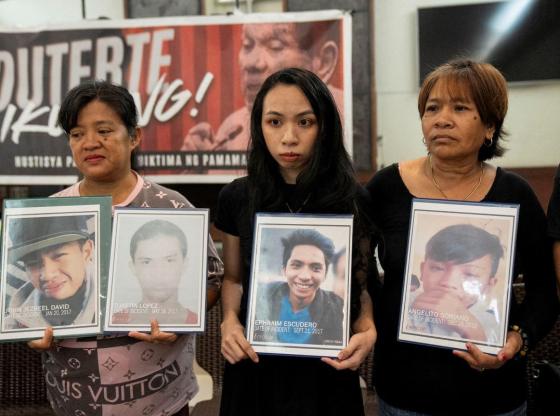

Following the arrest of former Philippine President Rodrigo Duterte on March 11 under an International Criminal Court warrant, relatives of drug war victims and human rights advocates have reported a wave of online abuse and disinformation campaigns.
Among them is Sheerah Escudero, whose teenage brother was found dead in 2017—his body bound and wrapped, a suspected casualty of Duterte’s bloody anti-drug campaign. While Duterte’s arrest offered her a measure of justice, it also sparked vicious online attacks from his supporters. She described receiving hateful messages calling her a liar and a drug user, with some commenters even saying drug addicts should be killed.
Escudero is not alone. Several human rights groups say victims’ families and lawyers have faced harassment, fueled by a coordinated misinformation effort across social media. False claims that Duterte’s arrest was a “kidnapping” and that the ICC has no jurisdiction have gone viral. Paid ads have also promoted Duterte as a hero, with no clear labels indicating political content.
Analysts say the current campaign mirrors the online tactics that helped Duterte win the presidency in 2016, earning the Philippines the label “patient zero” for global disinformation. The recent backlash aims to undermine the credibility of witnesses and victims ahead of Duterte’s trial in The Hague.
Despite the threats, advocates remain firm. Human rights lawyer Kristina Conti warned of attempts to silence witnesses, while researcher Carlos Conde is countering online lies with educational TikToks. Escudero, despite fearing for her safety, says she won’t stop seeking justice.
“This is the time to stand up against fake news,” she said. “We will let the truth speak.”