

MANILA, Philippines — Moving aggressively to shift the consumer artificial intelligence landscape into everyday wearable fashion, state-of-the-art computational ecosystems are preparing for a major hardware rollout. Google officially unveiled its upcoming Intelligent Eyewear lineup during the recent Google I/O event on May 19, confirming that the first wave of hardware will hit the global market by Fall 2026.
Developed in a close engineering partnership with Samsung and South Korean luxury fashion brand Gentle Monster, the new glasses are designed to transition AI interactions away from standard smartphone displays.
Rather than overwhelming the consumer market with heavy, complex visual interfaces on day one, the tech partnership is utilizing a stepped deployment strategy that prioritizes lightweight wearability and everyday fashion aesthetics:
[Google I/O 2026 Hardware Reveal] ──► Powered by Android XR & Snapdragon Spatial Chips │ ▼ (The Stepped Launch Schedule)[Fall 2026: Audio Glasses First] ◄── Delivers Heads-Up, Hands-Free AI Assistance │ ▼ [Display Glasses with Full AR Overlays Tabled for Later]
Shahram Izadi, Google’s General Manager and Vice President of XR, confirmed that the hardware runs on Android XR—a new operating system built with Samsung and specifically optimized for Qualcomm’s high-performance Snapdragon spatial computing processors.
The initial Fall 2026 release will focus entirely on an audio-first experience, removing the need for a physical digital screen by communicating directly into the user’s ear:
                          [ INTELLIGENT EYEWEAR RECOGNITION FLOW ]
                                             │
         ┌───────────────────────────────────┴───────────────────────────────────┐
         ▼                                                                       ▼
   [ INTENT INITIATION ]                                                   [ SPATIAL COMPREHENSION ]
   • **Voice Activation Command:** The internal system is triggered when   • **Camera Scanning:** The integrated camera array takes visual
     the user utters the standard phrase, *"Hey Google."*                     data from the immediate environment.
   • **Natural Prompting:** Users state their request directly into the    • **Gemini Processing:** It passes the imagery to Gemini, combining
     concealed microphones built into the temples.                            real-time observations with global knowledge bases.
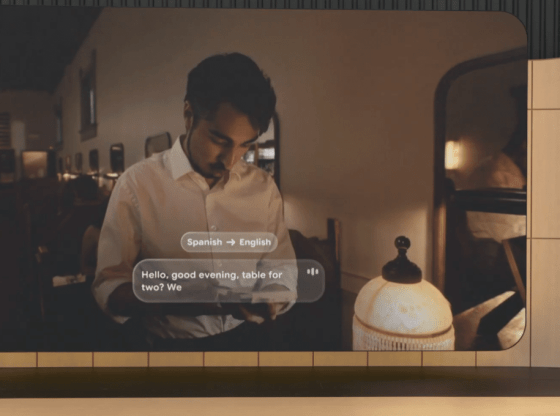
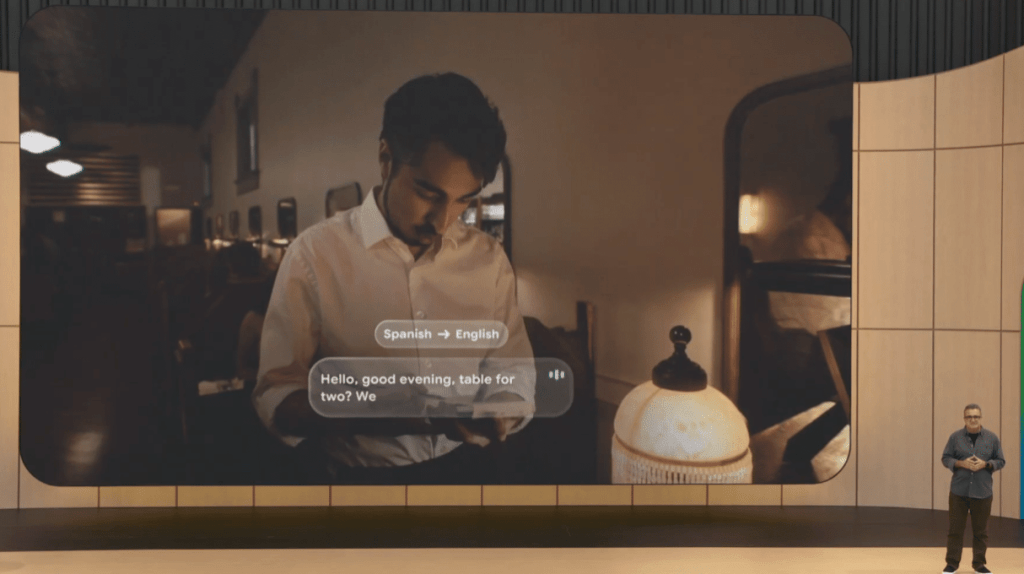
The audio glasses process the environment in real time, feeding immediate details back to the wearer through high-clarity, directionally targeted audio streams. Wearers can look at objects or environments and ask for simple translations of foreign traffic signs, dictate real-time recipe conversions while cooking, or request immediate step-by-step navigation instructions while walking through unfamiliar urban zones.
By teaming up with Gentle Monster, known worldwide for its disruptive, Y2K-inspired eyewear frames, Google is intentionally targeting a fashion-forward audience to avoid the bulkier, technical aesthetics that slowed down historical smart glasses concepts.
| Collaboration Partner Roles | Core Structural Contributions | Long-Term Product Target |
| Samsung Electronics | Leads the complex hardware miniaturization, battery distribution, and physical component assembly. | Drives seamless connectivity across the broader Android mobile hardware ecosystem. |
| Google Development | Supplies the underlying Android XR software infrastructure and the Gemini 3.5 Flash agentic intelligence layer. | Ensures rapid information queries, swift coding execution, and background cross-application updates. |
The tech giant confirmed that the upcoming audio glasses will offer cross-platform compatibility, allowing them to pair smoothly with both Android and iOS devices right at launch.
While the display-ready glasses will eventually project augmented reality metrics directly onto the glass lenses when active, Google has not committed to an official release window for that premium version. For now, the focus remains firmly locked on the Fall 2026 launch, where the technology sector will find out if blending luxury style with real-time audio AI can turn smart eyewear into a permanent daily accessory.