
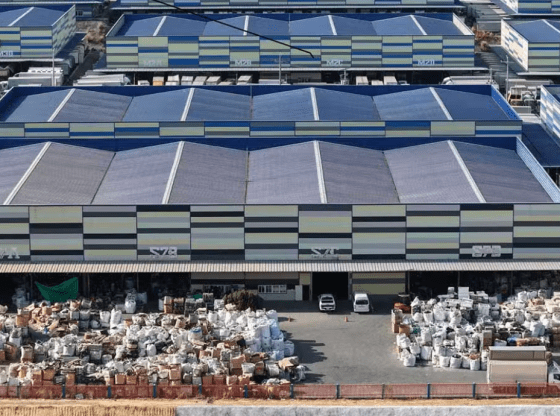

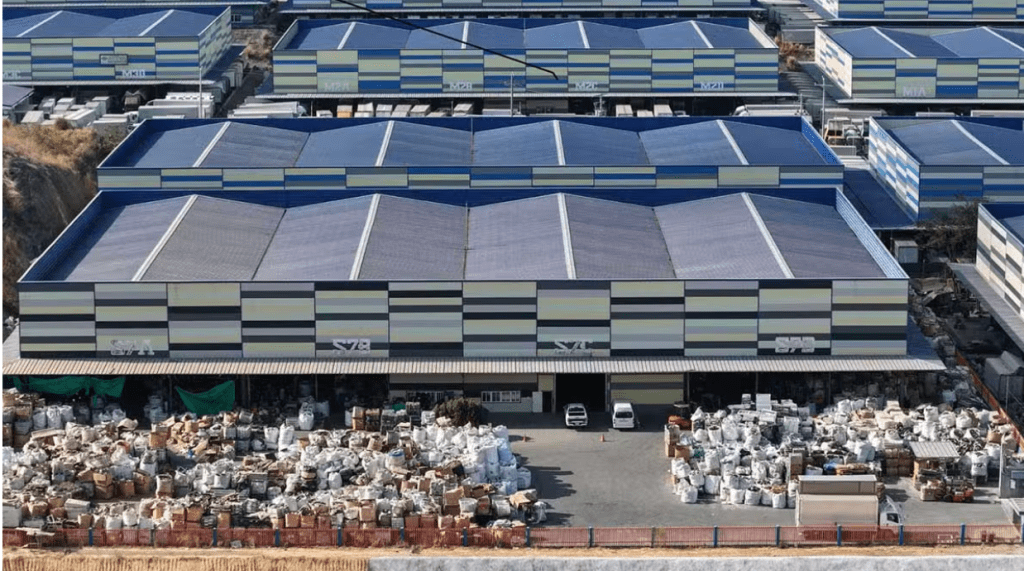
SUBIC BAY FREEPORT, Philippines — Sounding the alarm over international treaty compliance and national sovereignty, an environmental coalition has warned that foreign entities are actively exploiting domestic regulatory cracks to convert the country into an electronic dumping ground.The newly formed Environmental Task Force Against Illegal E-Waste Imports to the Philippines (END E-WASTE IMPORTS) stated that a massive influx of suspected electronic scrap from the United States directly violates the country’s obligations under international environmental law.
The task force asserts that importers are hiding behind a “recycling loophole” to bring in millions of pounds of hazardous materials through economic free zones.
The public controversy erupted after an investigative monitoring campaign spearheaded by the international watchdog Basel Action Network (BAN) and local NGO BAN Toxics tracked massive, multi-month industrial waste flows directly into the heart of Central Luzon:
                            [ ELECTRONIC WASTE APPREHENSION METRICS ]
                                               │
         ┌─────────────────────────────────────┴─────────────────────────────────────┐
         ▼                                                                           ▼
   [ THE GPS TRACKER TRAIL ]                                                   [ AERIAL WAREHOUSE DATA ]
 • **234 Containers Detected:** Since March 2025, BAN's "Operation   • **Active Processing:** Hidden GPS trackers led directly to
   Can Opener" has flagged 234 cargo containers of suspected e-waste  • warehouse factories operating inside the freeport.
   and one container of plastic waste entering Subic.                 • **Smelting Facilities:** Subsequent aerial drone footage presented
 • **The Consignee Roster:** The shipments were imported by three    • by advocates captured large-scale electronic processing, toxic
   Subic-based firms: Refit Electronic Technology Inc., Enjoy        • stockpiles, and a functional smelting facility generating unmonitored
   Electronics Subic, and Jetlong Hi-Tech Electronics Philippines.    • residual byproducts.
The core of the crisis lies in a major breakdown between international treaties and local judicial interpretations. While the Bureau of Customs (BOC) was alerted to the illegal cargo, border agents have been legally blocked from seizing the electronics due to a highly controversial Manila Regional Trial Court (RTC) ruling.
The legal conflict divides regulatory bodies across distinct statutory lines:
[ THE STRUCTURAL JURISDICTIONAL SPLIT ] │ ▼[ Free Zone Shield ]──► The Manila RTC declared the DENR's Pre-Shipment Importation Clearance (PSIC) requirements unconstitutional for economic zones, ruling that Subic operates as a "separate customs territory." │ ▼[ Treaty Bypass ] ──► Lawmakers, including Kabataan Partylist Rep. Renee Co, fiercely criticized the Subic Bay Metropolitan Authority (SBMA) for treating the freeport as a "Basel Convention-free zone" to protect local trade incomes. │ ▼[ Customs Deficit ] ──► Because the RTC permanent injunction strips the BOC of outright seizure authority inside the zone, the government's premier border enforcement agency has been rendered legally powerless to intervene.
The END E-WASTE IMPORTS coalition emphasized that under the Basel Convention—which the Philippines ratified in 1993—Waste Electrical and Electronic Equipment (WEEE) is strictly classified as hazardous. Even if an exporting nation like the United States (which is notably not a party to the Basel Convention) does not label electronic scrap as toxic, international law dictates that the importing country’s stricter classification takes legal precedence.
Under Article 4 of the convention, signatory nations are explicitly banned from importing hazardous waste from non-signatory nations unless protected under a transparent, publicly available bilateral agreement. Because no such US-Philippine bilateral agreement exists, the task force notes that allowing these shipments to proceed under the guise of a “circular economy recycling model” shifts the toxic environmental burden of wealthy Global South nations straight onto local Filipino laborers and surrounding ecosystems.
In response to the escalating public outcry, SBMA Officer-in-Charge Senior Deputy Administrator Amethya Dela Llana fiercely denied the “dumping” narrative, maintaining that the materials are legally brought in for accredited recycling, resource extraction, and material recovery under strict local guidelines.
However, state enforcement agencies are moving to reclaim regulatory control. The Bureau of Customs has officially called a high-stakes, multi-agency emergency coordination meeting to map out legal remedies alongside the Office of the Solicitor General (OSG) to appeal the restrictive RTC ruling. Concurrently, Rep. Renee Co and ACT Teachers Rep. Antonio Tinio have filed House Resolution No. 1164 to launch a full congressional inquiry into the shipments and prosecute any freeport officials found complicit in circumventing the country’s sovereign environmental laws.