


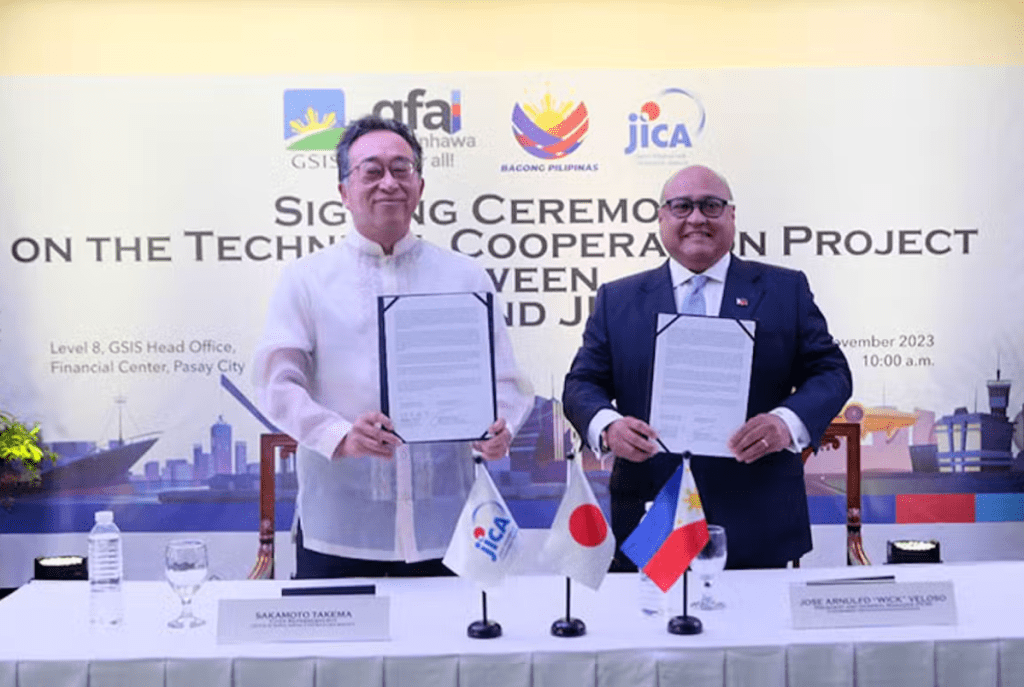
MANILA, Philippines — The Government Service Insurance System (GSIS) and the Japan International Cooperation Agency (JICA) are moving forward with a major digital overhaul of how Philippine government assets are valued and insured against natural disasters.
The initiative was the focus of the second Joint Coordinating Committee Meeting on Thursday, March 5, 2026. This three-year project, titled “Strengthening Financial Resilience of Public Assets to Natural Disasters by Improvement of Public Insurance,” aims to modernize the insurance of thousands of public structures, including:
- Schools and Hospitals
- Bridges and Roads
- Municipal Halls and Government Infrastructure
GSIS President Wick Veloso highlighted that many government agencies currently have outdated or incomplete records. The project will address this by:
- Science-Based Valuation: Establishing a standardized method for estimating the replacement costs of public buildings.
- GeoRiskPH Integration: Incorporating hazard data (earthquakes, volcanic activity, landslides, etc.) from the GeoRiskPH platform into a new digital system.
- Automated Underwriting: Streamlining the insurance process to ensure premiums accurately reflect the actual disaster risks faced by specific assets.
The collaboration is timely, as the Philippines continues to rank among the most disaster-prone countries globally. JICA Senior Representative Nobuhiko Aoki emphasized the “fiscal and macroeconomic risks” posed by climate change.
- GDP Warning: Recent reports suggest climate-related disasters could shrink the Philippines’ GDP by 5% by 2040, potentially worsening to a 20% loss by 2070.
- Immediate Impact: Major natural disasters can reduce local economic activity by 2.2% at the time of impact, with the negative effects often persisting for years.
The GSIS–JICA partnership aims to build a more resilient financial shield for the country, ensuring that the government has the funds necessary to rebuild critical infrastructure quickly after a catastrophe.