
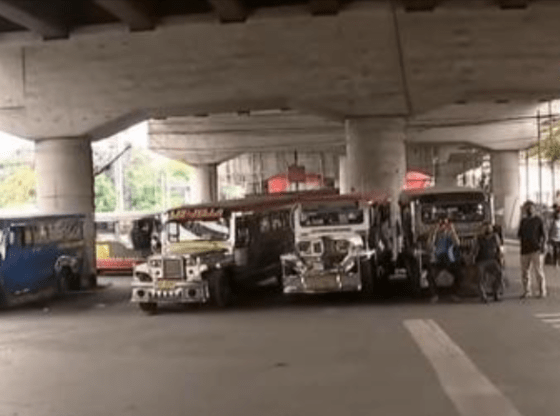

As the deadline looms for the crackdown on unconsolidated public utility vehicles (PUVs), data from the Land Transportation Franchising and Regulatory Board (LTFRB) has unveiled significant gaps in the consolidation of jeepney and UV Express units across the Philippines. A total of 1,948 routes currently lack consolidated PUVs, posing a considerable hurdle in the nationwide push for modernization and regulation in the sector.
Out of the affected routes, 1,767 are jeepney routes, while 181 are for UV Express services. Regionally, Bicol emerges as the most challenged area, with 451 routes devoid of consolidated jeepneys, overshadowing the 214 routes that have successfully met the criteria. The regions of Ilocos and Mimaropa also face notable disparities, with a higher number of unconsolidated routes compared to those that have achieved consolidation.
In the National Capital Region (NCR), the contrast is stark, with 320 routes still in need of consolidation against 555 that have completed the process. Notably, regions like Central Visayas, Soccsksargen, and Caraga have achieved complete consolidation of jeepney routes, setting a benchmark for others to follow.
The situation with UV Express services mirrors this trend. The NCR again tops the list with the highest number of affected routes at 76. Following closely are Eastern Visayas and Ilocos, pointing towards a widespread challenge in meeting the consolidation standards set by the government.
This data release coincides with the government’s declaration that only 76.6% of jeepneys have formed cooperatives by the December 31, 2023 deadline, a requirement under the Public Utility Vehicle Modernization Program (PUVMP). With the February 1 crackdown nearing, unconsolidated PUVs face the risk of being classified as “colorum,” or illegal operators.
Despite these looming challenges, the Land Transportation Office (LTO) is preparing to issue special permits to consolidated PUVs to ensure passenger services in affected routes are not disrupted. This measure is part of the broader PUVMP initiative, launched in 2017, which aims to introduce environmentally friendly and roadworthy vehicles into the public transport system. However, the high costs of modern jeepney units, often exceeding P2 million, have been flagged by state-run banks as a significant barrier for PUV drivers and operators.
In the midst of this transformative yet tumultuous phase for the country’s public transportation system, the Supreme Court’s involvement adds a layer of complexity. The court has sought comments from the DOTr and the LTFRB on a petition challenging the PUVMP’s implementation, filed by various advocacy and party-list groups. With the LTO set to proceed with the crackdown against unregistered PUVs, the outcome of this legal intervention could significantly influence the trajectory of the PUV modernization efforts.