
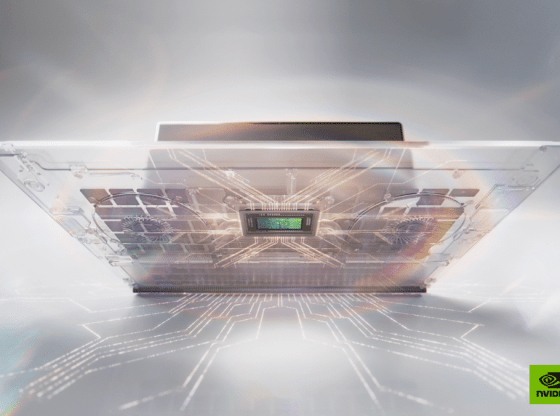


MANILA, Philippines — Setting off a seismic shift across the global personal computing landscape, next-generation neural processing architectures are officially dismantling traditional silicon boundaries. NVIDIA has officially unveiled its highly anticipated RTX Spark platform.
The breakthrough release marks a definitive pivot away from standard hardware-bound rendering, establishing an autonomous, system-wide AI layer that changes how operating systems, gaming engines, and local creative suites function.
Rather than acting as a traditional hardware graphics card upgrade, RTX Spark operates as an omnipresent neural middleware layer. It seamlessly unifies on-device Tensor cores with cloud-native generative engines to completely change standard system operations:
                        [ THE RTX SPARK CORE ECOSYSTEM ]
                                        │
         ┌──────────────────────────────┼──────────────────────────────┐
         ▼                              ▼                              ▼
 [ HYBRID COGNITIVE COMPUTE ]     [ SYSTEM-WIDE LATENCY VOID ]   [ MULTI-MODAL CONTEXT ENGINE ]
 • Dynamically offloads complex  • Completely bypasses local operating • Constantly monitors system wide
   generative workflows, shifting  system rendering pathways, using  user intents, allowing real-time
   between local Tensor arrays     deep learning models to predict   voice, code, and graphical asset
   and high-speed cloud networks.  and generate UI actions instantly. generation straight onto the screen.
The system represents the death of localized performance bottlenecks, ensuring that entry-level computing setups can tap into enterprise-grade processing speeds without requiring high thermal envelopes.
For decades, the standard personal computer has relied on a linear data handoff: the Central Processing Unit (CPU) handles logic, while the Graphics Processing Unit (GPU) renders visuals. RTX Spark aggressively shatters this old framework:
[ THE NEURAL PROCESSING EVOLUTION ] │ ▼[ The Legacy Handoff ] ──► Traditional systems throttle data as files move back and forth across the physical PCIe motherboard lanes. │ ▼[ The Spark Consolidation ] ──► RTX Spark's predictive neural frameworks bypass traditional rendering pipelines, generating complex frames and logic trees simultaneously. │ ▼[ Real-Time UI Generation ] ──► Applications no longer require heavy, pre-installed local code; software interfaces are generated dynamically on-screen based on raw user inputs.
The practical applications of the platform stretch far past standard high-frame-rate PC gaming, paving a highly disruptive pathway for professional digital creators, video editors, and software engineers.
| Industry Vertical | Legacy Operational Baseline | The RTX Spark Transformation |
| Software Development | Writing code requires manual compilation, extensive debugging loops, and local syntax testing. | Software engineers can describe application logic in plain text; RTX Spark builds, optimizes, and compiles complex application frameworks in real time. |
| 3D & Video Production | Rendering high-fidelity cinematic scenes requires massive, power-hungry local desktop workstations. | Video editors can generate fully ray-traced, hyper-realistic environments using simple prompt streams, slashing multi-hour renders down to mere milliseconds. |
| Operating System UI | Users navigate rigid, static file directories, manually clicking through multi-layered menus. | The entire desktop environment transforms into a fluid, conversational space that dynamically self-adjusts to match active professional workflows. |
NVIDIA’s global developer networks confirmed that major software suites—including Adobe Creative Cloud, Blender, and Microsoft Windows 11 frameworks—have already integrated native RTX Spark codebases. As early consumer and enterprise deployment loops spin up across the globe, the technology sector is reaching a unified consensus: the era of the static, pre-compiled personal computer is officially over. By replacing standard compute pipelines with an adaptive, generative neural layer, RTX Spark establishes a hyper-efficient foundation for the next decade of personal computing.