
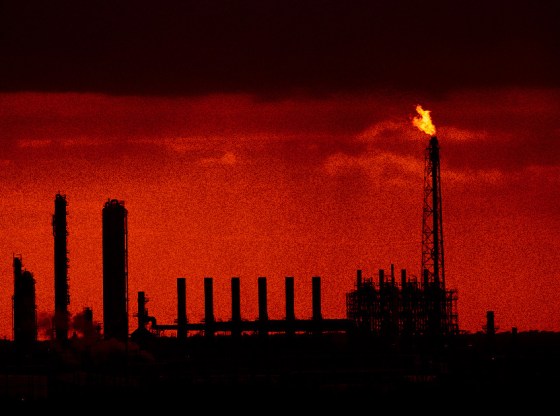

Barrel of Laughs: Oil Industry Reckons with Renewable Surge
The oil industry is staring down a potential crisis, as the International Energy Agency (IEA) predicts a massive surplus in oil supply that could drastically lower prices and destabilize the market. This impending oil “glut” is largely due to the rapid growth of renewable energy, especially solar power.
Surplus Shock
The IEA’s report forecasts a peak in global oil demand by 2029, plateauing at 105.6 million barrels per day. Following this peak, demand is expected to decline, leading to a supply surplus of about 8 million barrels per day, a disparity not seen since the COVID-19 pandemic lockdowns.
“Such a massive oil production buffer could usher in a lower oil price environment, posing tough challenges for producers in the U.S. shale patch and the OPEC+ bloc,” the IEA noted, referring to the coalition of major oil producers including Saudi Arabia and the UAE.
Advanced Economies Lead the Decline
In advanced economies, where oil demand has been decreasing for decades, the IEA projects a drop from 45.7 million barrels per day in 2023 to 42.7 million by 2030. Meanwhile, major oil producers like the U.S. and OPEC+ have ramped up investments, anticipating continued high demand from expanding economies like China and India.
However, China’s economic growth, which has driven about 60% of the global oil demand increase over the past decade, is expected to slow, reducing its oil consumption.
Renewables Rise
The IEA remains optimistic about the impact of renewable energy. Increased adoption of electric vehicles (EVs) — with China leading as the top manufacturer — and a surge in solar energy are seen as significant factors in reducing oil demand. Solar energy’s efficiency is already causing prices to dip into the negative in certain markets. Despite some uncertainty in EV sales, the overall trend toward renewables is clear.
The Future of Energy
While the shift to renewables offers a hopeful outlook for energy sustainability, the oil industry’s future is uncertain. The potential oversupply and consequent price drop could lead to significant challenges for oil producers worldwide.