


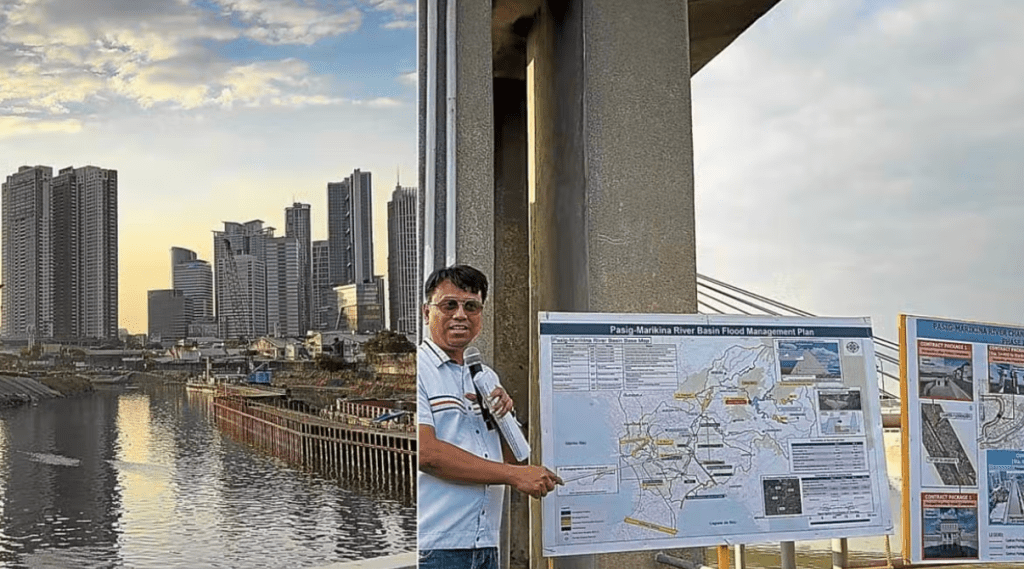
MANILA, Philippines — In a major leap for the capital’s disaster resilience, the Department of Public Works and Highways (DPWH) has begun rolling out cutting-edge structural technology along the Pasig-Marikina River channel to significantly boost Metro Manila’s flood defense systems.
The initiative is part of the ongoing Phase IV of the Pasig-Marikina River Channel Improvement Project, a massive infrastructure undertaking aimed at mitigating the perennial overflow of the region’s primary waterways during the typhoon season.
The new technology involves the installation of high-durability steel sheet piles and reinforced concrete walls designed to withstand extreme water pressure and rapid current speeds. Unlike traditional river walls, these advanced structures are engineered with a deeper subterranean foundation, providing better stability against soil erosion and scouring during heavy rainfall.
“This isn’t just about building higher walls; it’s about building smarter ones,” a DPWH project engineer explained. “The integration of these new materials allows us to maximize the river’s carrying capacity while ensuring the structural integrity of the banks in high-risk urban areas.”
In addition to the physical barriers, the project is incorporating automated sluice gates and improved drainage outfalls. These features are designed to regulate water flow more effectively, preventing backflow into residential streets when the river levels peak.
The deployment of this technology is particularly critical for low-lying areas in Pasig, Marikina, and parts of Quezon City, which have historically borne the brunt of severe flooding. By widening and deepening key sections of the river channel and reinforcing them with these modern solutions, the DPWH expects to drastically reduce the “flood return period”—the frequency and duration of inundation in surrounding communities.
Government officials noted that the project is being executed with international technical cooperation to ensure that the flood control measures meet global engineering standards. Construction is being fast-tracked in several priority zones to complete as much work as possible before the peak of the monsoon season.
While the structural improvements are a vital component of the city’s defense, authorities continue to remind the public that maintaining clean waterways is equally essential. The DPWH is working alongside local government units to ensure that the newly improved channels remain free of solid waste, which can clog the advanced drainage systems and diminish their effectiveness.