


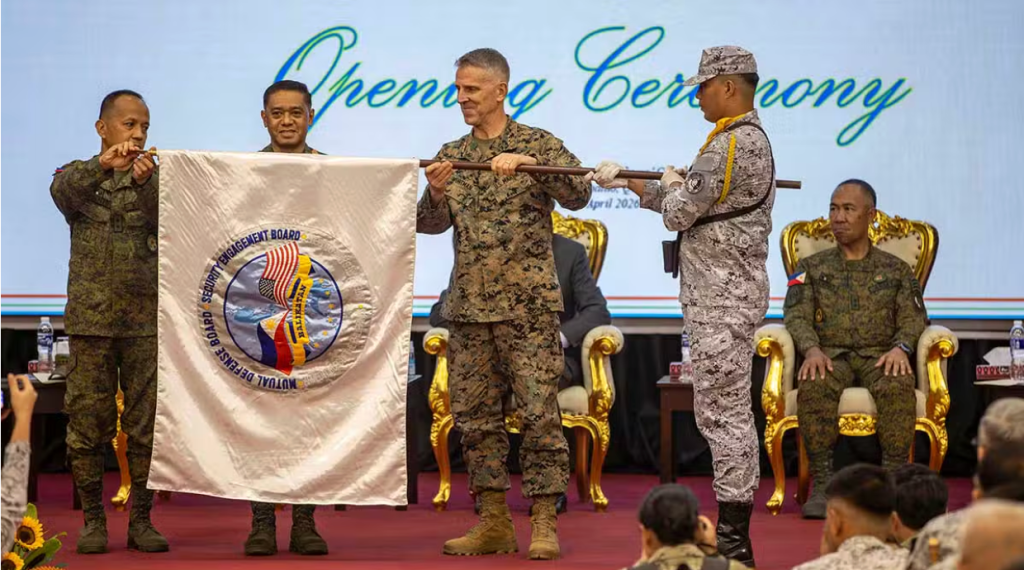
MANILA, Philippines — The Philippines and the United States officially launched the 41st Balikatan (Shoulder-to-Shoulder) Exercises on Monday, April 20, 2026, marking one of the largest and most complex iterations of the annual war games. This year’s drills signal a significant shift toward multilateral defense, featuring participation from allied forces including Japan, France, and Canada, as the Philippines continues to strengthen regional security ties.
Over 17,000 personnel—comprising roughly 10,000 U.S. troops and 7,000 Filipino soldiers—will participate in the three-week exercise, which will span key locations facing the disputed South China Sea and the Taiwan Strait.
For the first time, the annual bilateral exercise has evolved into a multinational display of force:
- Multilateral Participation: Forces from France, Japan, and Canada are joining specific maneuvers, a development made possible by recent Visiting Forces Agreements (VFA) signed between Manila and these nations.
- Strategic Signaling: Despite Washington’s current focus on the conflict in the Middle East, U.S. Marine Lt. Gen. Christian Wortman emphasized that the U.S. commitment to the Indo-Pacific and the Philippines remains “ironclad.”
- Advanced Maneuvers: One of the highlights will be a maritime strike exercise in Ilocos Norte, where Japanese forces will coordinate with PH-US troops to fire missiles at a mock enemy ship in the peripheries of the South China Sea.
AFP Chief of Staff Gen. Romeo Brawner Jr. stated that the drills are designed to build “deterrence and resilience” against regional aggression.
- South China Sea Focus: Drills will include live-fire maneuvers, ship-sinking exercises, and amphibious landings in provinces like Palawan and Batanes, which are strategic flashpoints in territorial disputes.
- International Law: Brawner noted that the exercises uphold a “free and open Indo-Pacific,” where nations can operate without coercion, a veiled reference to the increasing maritime confrontations with Chinese forces.
While military officials tout the strategic benefits, the exercises have met with criticism from local sectors:
- Livelihood Disruptions: The national fishers’ group Pamalakaya reported that a 11-day “no-sail zone” in Subic, Zambales, is preventing over 4,800 registered fisherfolk from going to sea.
- Economic Strain: Protesters have urged the government to redirect Balikatan funding toward livelihood subsidies for farmers and fishers struggling with rising fuel costs and the national energy crisis.
- Geopolitical Backlash: China has officially objected to the drills, accusing the participants of attempting to “contain” its regional rise and “playing with fire.”
Military leadership maintains that the exercises are purely defensive and are also critical for honing disaster response capabilities in one of the world’s most disaster-prone regions.