
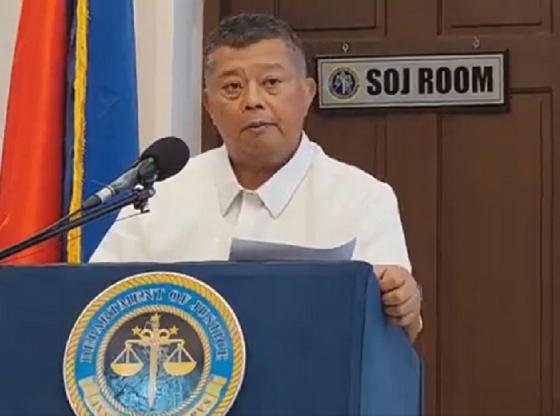

“We respect the actions of Interpol 99% of the time,” stated Justice Secretary Jesus Crispin Remulla on Thursday, addressing the potential implementation of an International Criminal Court (ICC) arrest order by Interpol against those implicated in the Duterte administration’s war on drugs.
Remulla affirmed the Philippines’ cooperation with Interpol and the ICC, emphasizing that the country, as an Interpol member, does not obstruct the organization’s movements unless a specific policy dictates otherwise, which would conflict with international commitments.
“We are not in the business of blocking any movement of Interpol unless a policy is laid out, which of course will go against our international commitments, so we will not touch that,” Remulla explained during a press briefing. He added that challenging Interpol could have serious repercussions for the Philippines.
Despite these assurances, Remulla indicated that the government would explore potential actions regarding Interpol’s involvement in this matter. “We will study the possibilities or the implications of dealing with Interpol on this matter,” he said.
Remulla also confirmed that the Philippine government received a request from the ICC to assist in interviewing “five persons.” This aligns with a claim by former senator Antonio Trillanes IV that Senator Ronald “Bato” Dela Rosa and four other former ranking officials of the Philippine National Police (PNP) have been named as suspects in the ICC investigation.
The other officials mentioned in the document were former PNP chief Oscar Albayalde, former Criminal Investigation and Detection Group (CIDG) chief Romeo Caramat Jr., former National Police Commission commissioner Edilberto Leonardo, and former PNP Intelligence Officer Eleazar Mata. Dela Rosa dismissed Trillanes’ post, stating his name has been repeatedly mentioned since 2016.
Albayalde expressed readiness to face the ICC, while Caramat defended Oplan Tokhang, claiming its success during his tenure as Bulacan provincial director.
Remulla emphasized that the Philippines has no obligation to cooperate with the ICC, as the country is no longer a member. “We are not in the business of informing these people that the ICC will talk to them because we are not members of the ICC. We just note such requests as a government,” he said.
The Philippines withdrew from the Rome Statute, the treaty establishing the ICC, in 2019 under then-President Rodrigo Duterte, following the initiation of a probe into his anti-drug operations. Official records report around 6,200 drug suspects killed during these operations, although human rights organizations suggest the actual number could be as high as 30,000 due to unreported cases.