


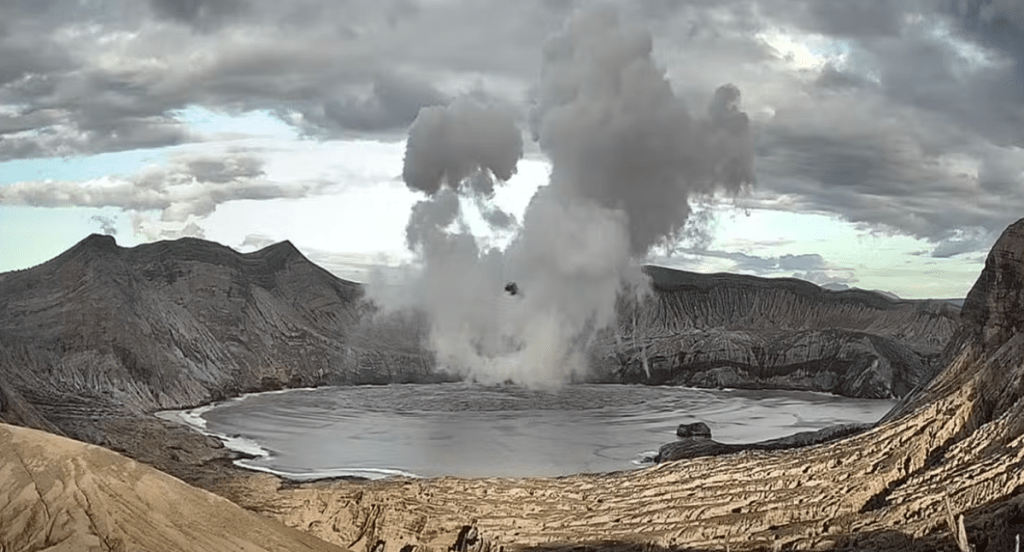
BATANGAS – The Philippine Institute of Volcanology and Seismology (PHIVOLCS) reported a marked increase in volcanic earthquakes and tremors at Taal Volcano as of early January 2026, signaling heightened unrest at one of the country’s most active volcanoes. In its latest bulletin issued on January 5, 2026, PHIVOLCS recorded multiple low-frequency volcanic quakes and continuous volcanic tremor episodes, accompanied by moderate plume emissions and upwelling of hot fluids in the Main Crater Lake.
Key Observations from PHIVOLCS
- Seismic Activity: Dozens of volcanic earthquakes daily, with tremor durations lasting minutes to hours—indicating magma or gas movement beneath the surface.
- Plume & Degassing: 300-1,000-meter tall plumes laden with volcanic gas (SO2 flux elevated).
- Ground Deformation: Slight inflation detected via precise leveling and InSAR data.
- Alert Level: Remains at Level 1 (abnormal/low-level unrest), but PHIVOLCS warns escalation to Level 2 (increasing unrest) is possible if activity persists or intensifies.
Entry to Taal Volcano Island—designated a Permanent Danger Zone—remains strictly prohibited due to risks of sudden steam-driven explosions, rockfalls, and toxic gas releases. Communities around Taal Lake are advised to prepare for potential ashfall and acid rain.
This surge follows episodic unrest in late 2025, reminding residents of past major eruptions (e.g., 2021 phreatomagmatic event displacing thousands). PHIVOLCS maintains 24/7 monitoring and urges vigilance.
Current Status Snapshot:
| Parameter | Observation |
|---|---|
| Alert Level | 1 (Low-level unrest) |
| Seismic Events | Increased volcanic quakes & tremors |
| Plume Height | 300-1,000 meters |
| SO2 Emissions | Elevated |
| Danger Zone | Taal Volcano Island (no entry) |
Stay updated via official PHIVOLCS channels—safety first!