
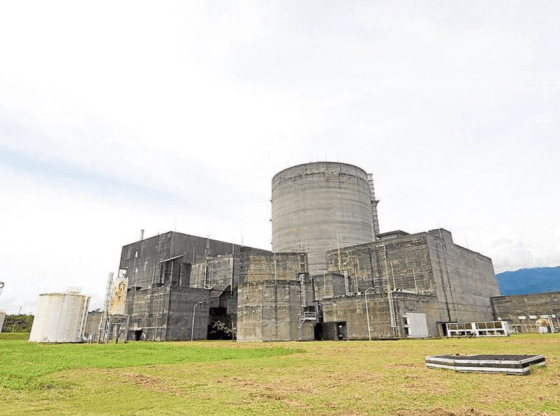

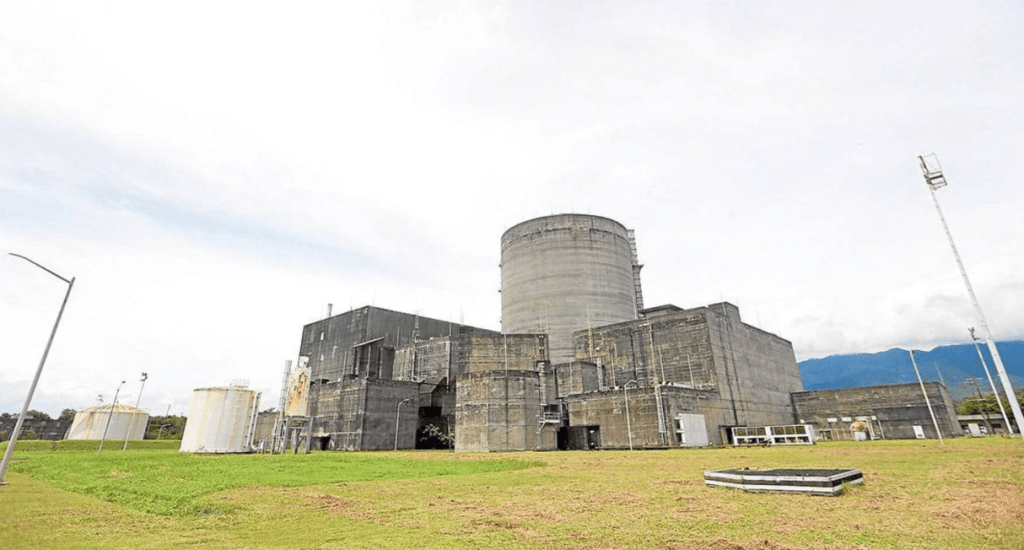
MANILA, Philippines — President Ferdinand Marcos Jr.’s ambitious timeline to introduce nuclear energy to the national grid faces major delays. Thursday, June 25, 2026, draft guidelines crafted by the Department of Energy (DOE) indicate that the country’s first operational nuclear power plant will not come online until 2038—six years later than the administration’s initial target of 2032.
The extended timeline is designed to prioritize strict structural adjustments, rigorous safety clearances, and investment protections for incoming market players.
The delay stems directly from a comprehensive 10-year staggered delivery program detailed in the DOE’s draft guidelines for auctioning off the country’s first nuclear power generation capacities. Instead of rushing construction, the government is deliberately pacing the regulatory roadmap to give energy firms ample time to adjust to a highly demanding compliance landscape:
                            [ THE DOE NUCLEAR COMPETITIVE MATRIX ]
                                              │
         ┌────────────────────────────────────┴────────────────────────────────────┐
         ▼                                                                         ▼
   [ REQUISITE COMPLIANCE BLOCKS ]                                           [ ATTRACTING PRIVATE OPERATORS ]
 • **Structural Evaluation:** Bidders are given a generous window to  • **Investment Safeguards:** DOE Undersecretary Sharon Garin
   assess vital metrics including capacity allocation, technical      • confirmed the agency is exploring structured financial perks
   pricing formulas, long-term contracting, and safety.               • to entice major energy conglomerates into the market.
 • **Geological Scrutiny:** Heavy emphasis is placed on definitive   • **Mitigating Risk:** These incentives are specifically engineered
   site selection protocols to completely insulate facilities against • to help high-capital consortia reliably recover their immense
   seismic and volcanic risks inherent to the archipelago.            • upfront infrastructure investments.
To bolster financial viability and maintain strict state oversight over critical public utilities, the draft guidelines introduce a mechanism for direct state equity participation.
The government reserves the right to absorb a localized financial stake in the pioneer nuclear facility:
[ THE STATE CAPITAL RESERVATION SEQUENCE ] │ ▼[ Up to 10% Equity ]──► The draft rules state the national government can legally negotiate and acquire up to a **10 percent economic interest** in the country\'s initial nuclear development project. │ ▼[ Funding Channels ]──► If activated, the equity block will be split or entirely absorbed by state-owned corporations— specifically the **Philippine National Oil Co. (PNOC)** or the **Maharlika Investment Corp. (MIC)**. │ ▼[ Due Diligence ] ──► State funding remains fully subject to rigorous independent fiscal evaluation, corporate board clearances, asset due diligence, and active local procurement laws.
Despite the elongated timeline, the private sector is already mobilizing. Lopez-led First Gen Corp., historically a heavy champion of natural gas and renewables, officially signaled its intent to monitor the upcoming nuclear market. Speaking at a forum organized by the Philippine Institute for Development Studies, First Gen Vice President Jay Joel Soriano stated that incorporating nuclear energy into the domestic mix has become “almost unavoidable.”
First Gen is keeping a close eye on international markets, particularly the evolution of Small Modular Reactors (SMRs). Generating between 300 to 450 megawatts (MW), these smaller systems are cheaper, faster to deploy, and inherently safer than massive traditional reactors. While the company has held preliminary exploratory talks with technology providers in the United States, it is waiting for SMR configurations to declare full commercial operations abroad before officially executing concrete local investment pacts—ensuring the country’s long-delayed nuclear renaissance launches on a proven, modern foundation.