


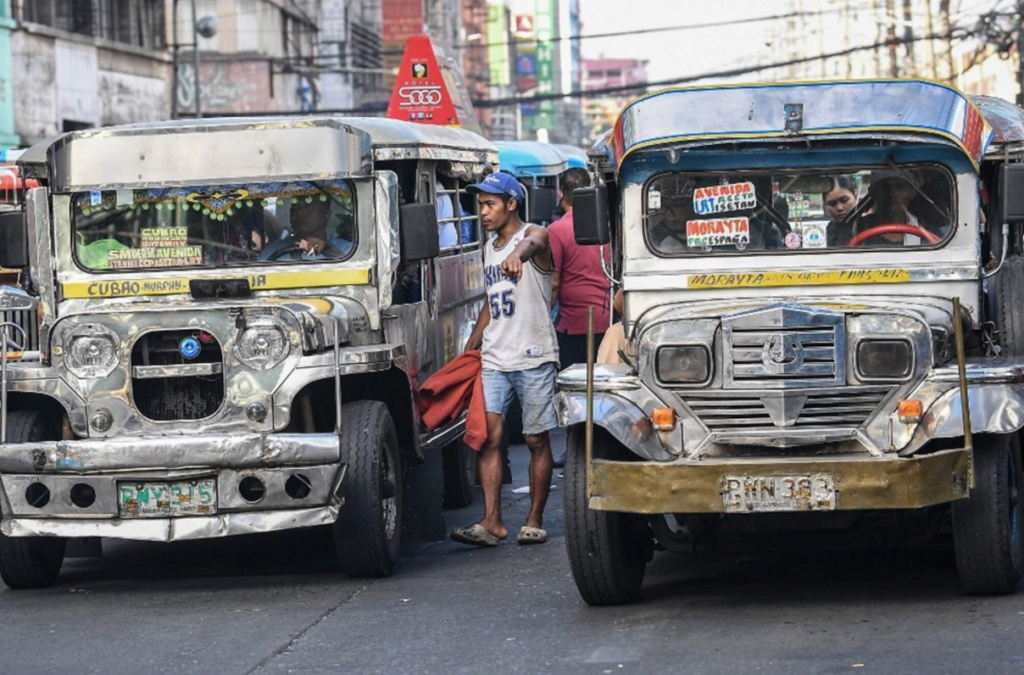
MANILA, Philippines — The transport group PISTON (Pagkakaisa ng mga Samahan ng Tsuper at Operator Nationwide) has raised a distress signal for the country’s traditional transport sector, reporting that average daily take-home pay for jeepney drivers and operators has plummeted to a meager ₱200 to ₱300. This drastic decline in earnings is the direct result of the “diesel double whammy”—the lethal combination of diesel prices breaching ₱100 per liter and the Philippine Peso sliding past ₱60 vs $1.
Before the recent global energy shocks triggered by the Middle East conflict, drivers typically averaged between ₱600 and ₱800 in daily earnings after fuel and “boundary” (rental) costs. Now, according to PISTON National President Mody Floranda, many drivers are spending 14 to 16 hours on the road only to go home with barely enough to buy a few kilos of rice and basic canned goods for their families.
“Our drivers are essentially working for the oil companies now,” Floranda stated during a picket at the Monumento Circle. “When you factor in the ₱100-per-liter fuel cost and the ₱60-exchange rate that drives up the price of spare parts, the ₱13 minimum fare is no longer enough to keep a family fed. We are seeing a slow death of the ‘King of the Road’ because it is simply no longer mathematically possible to survive.”
The Breakdown of the Financial Crisis for Drivers:
- The Fuel-to-Income Gap: A typical jeepney consumes roughly 25 to 30 liters of diesel in a full day of plying a Metro Manila route. At ₱100 per liter, fuel alone costs ₱2,500 to ₱3,000—often exceeding the total fares collected during off-peak hours.
- Maintenance and the 60-Peso Factor: Since most jeepney spare parts (tires, oil filters, brake pads) are imported, the weakening Peso has caused maintenance costs to spike by 15% to 20% in the last month alone.
- The “Boundary” Burden: Operators, who also face rising costs for registration and insurance, are struggling to collect the traditional “boundary” from drivers, leading to a breakdown in the relationship between vehicle owners and workers.
- Competition from Modernized Units: While the government pushes for the Public Utility Vehicle Modernization Program (PUVMP), PISTON argues that the ₱2.5-million price tag for modern units is “impossible” to pay off when daily earnings are less than the cost of a fast-food meal.
The PISTON report comes as the government implements its ₱21.47-billion relief package, which includes the halving of LRT-2 and MRT-3 fares. While rail commuters are seeing relief, jeepney drivers argue that these measures actually decrease their ridership, further cannibalizing their already dwindling income. This follows the heartbreaking story of a driver forced to stop his child’s college education due to these same economic pressures.
In response, PISTON is reiterating its core demands:
- Immediate Suspension of Fuel Excise Tax: To bring diesel prices back down to a manageable level.
- Scrapping of the Oil Deregulation Law: To allow for more government control over pump prices during international crises.
- Direct Fuel Subsidies for PUVs: Ensuring that vouchers are distributed more efficiently than the previous “slow” rollouts.
As the Amihan season fades and the Easterlies bring blistering summer heat to the city, drivers are facing harsher working conditions for lower pay. With the Holy Week rush approaching, PISTON has warned of further “tigil-pasada” (transport strikes) if the administration does not provide a concrete “lifeline” for the hundreds of thousands of workers who remain the backbone of Philippine mobility.