
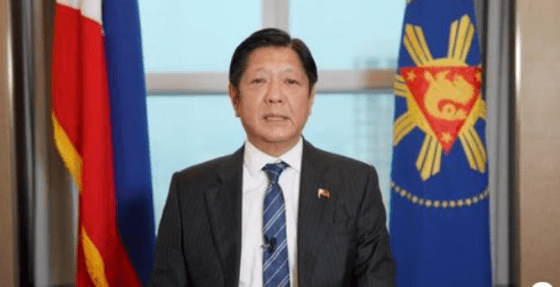

President Ferdinand Marcos Jr. of the Philippines is poised to make a significant visit to Australia, where he will address its Parliament next week, marking a historic moment as the first Filipino leader to do so. This visit, scheduled for February 28 to 29, comes as an invitation from the Australian government, highlighting the deepening ties between the two nations.
The Presidential Communications Office (PCO) announced that President Marcos’s address would focus on the vision for the Strategic Partnership between the Philippines and Australia. This partnership, which evolved from a Comprehensive Partnership in 2015, was solidified in September last year during Australian Prime Minister Anthony Albanese’s visit to the Philippines.
President Marcos will join the ranks of 16 world leaders who have had the honor of addressing the Australian Parliament, a list that includes notable figures such as US Presidents George H.W. Bush, Bill Clinton, George W. Bush, and Barack Obama, as well as Chinese President Hu Jintao, British Prime Minister Tony Blair, and Chinese President Xi Jinping.
The visit will also encompass meetings with Australian senior officials, where discussions on defense and security, trade, investments, people-to-people exchanges, multilateral cooperation, and regional issues are expected. The signing of new agreements in areas of mutual interest is anticipated to further strengthen the cooperation between the two countries and expand engagements for mutual capacity building.
As the Philippines and Australia approach the 78th anniversary of their diplomatic relations this November, this visit symbolizes the enduring friendship and collaborative spirit between the two nations. With a significant Filipino community of 408,000 people in Australia, the ties that bind these countries are not only diplomatic but deeply personal, representing a vibrant bridge between their peoples.
Australia’s unique relationship with the Philippines is further underscored by the Status of Visiting Forces Agreement (SOVFA), highlighting the strategic and cooperative defense engagement shared between the two countries.