
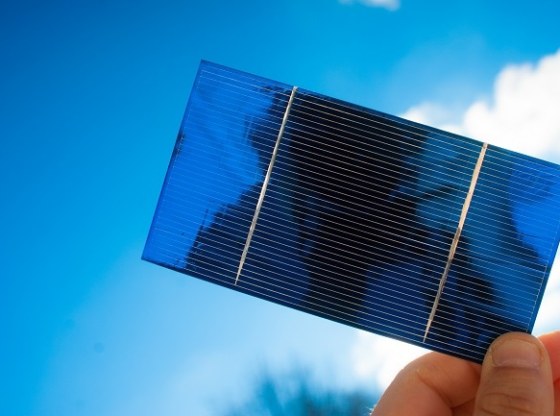

Researchers at City University of Hong Kong (CityUHK) have discovered a method to produce more affordable solar panels, potentially boosting global access to renewable energy.
The team, led by Professor Alex Jen Kwan-yue, developed a technique to manufacture perovskite solar cells using material science solutions that allow production akin to printing newspapers. This innovative approach enables the creation of 1,000 solar panels daily.
READ ALSO: Scientists Develop Organic Solar Panels from Wood
These advanced solar panels, featuring semi-transparent materials, can function as light-absorbing glass windows, paving the way for “urban solar farms” on high-rise buildings. This could significantly increase the capacity for electricity generation in densely populated cities without additional power stations.
Potential Applications of the New Solar Panels
Professor Jen’s team published their findings in Nature Energy, detailing their methodology: “The team designed a series of organic redox mediators with appropriate chemical potentials to selectively reduce iodine and oxidize metals.” Their integrated cells retain over 90% of their initial Power Conversion Efficiency (PCE) after 500 hours of operation.
The semi-transparency of these solar panels makes them suitable for use in windows, allowing buildings to generate power while maintaining natural light. Moreover, according to TechXplore, these panels can also absorb energy from weak indoor light, which opens up possibilities for integrating them into smaller, eco-friendly devices.
Startup HKTech Solar Limited will spearhead the commercialization of these panels, with Dr. Francis Lin, a postdoctoral student of Professor Jen, overseeing the applications. The team plans to establish a pilot production line next year, targeting an annual output of 25 megawatts.
Keywords: affordable solar panels, perovskite solar cells, urban solar farms, renewable energy, City University of Hong Kong, material science, Power Conversion Efficiency, green technology, HKTech Solar Limited, sustainable energy solutions.