

Far From Home
For decades, scientists have speculated that the Moon’s surface hides a vast network of tunnels. This theory, dating back to the Apollo missions, has now been confirmed.
Researchers at the University of Trento in Italy used advanced data analysis to examine radar reflections, uncovering the “first direct evidence of an accessible lava tube under the Moon’s surface,” said Lorenzo Bruzzone, a professor at the university and co-author of a new paper in Nature Astronomy.
“These caves have been theorized for over 50 years, but it is the first time ever that we have demonstrated their existence,” Bruzzone elaborated. The discovery opens new possibilities for establishing permanent human bases on the Moon.
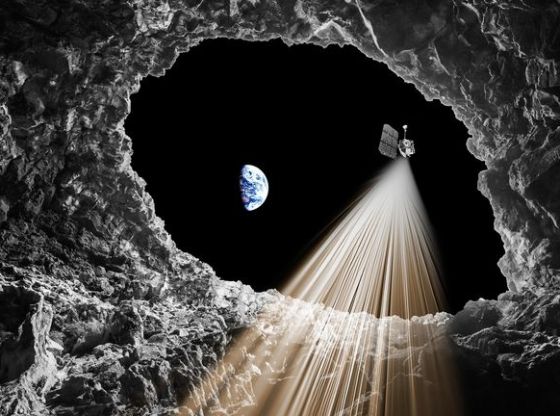
One identified cave, at least 330 feet deep, could protect astronauts from radiation, extreme temperature fluctuations, and micrometeoroid impacts, facilitating a more stable lunar presence.
Shelter Skelter
Bruzzone and his colleague, assistant professor Leonardo Carrer, utilized radar data from NASA’s Lunar Reconnaissance Orbiter to explore Mare Tranquilitatis, the Apollo 11 landing site. Their reanalysis of this data revealed radar reflections indicating an underground cave conduit.
“Years later, we have reanalyzed these data with complex signal processing techniques we have recently developed and have discovered radar reflections from the area of the pit that are best explained by an underground cave conduit,” Bruzzone explained.
Carrer added, “Thanks to the analysis of the data we were able to create a model of a portion of the conduit. The most likely explanation for our observations is an empty lava tube.”
The cave, with a small skylight leading to a sloping floor, dates back millions to billions of years, formed by ancient lava flows. The study suggests these tubes could be crucial for future lunar bases.
“After all, life on Earth began in caves, so it makes sense that humans could live inside them on the Moon,” Carrer told the BBC.
Future missions could deploy robots or drones to explore these tubes further, determining their suitability for human habitation. Some tunnels may even maintain a temperature around 63 degrees Fahrenheit, ideal for shelter.
Notably, China’s space program is also exploring the potential for bases inside lunar lava tubes, indicating an ongoing race to establish a lunar foothold.