
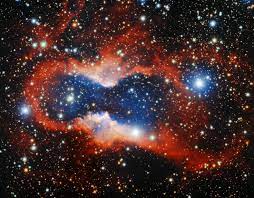

Haze of Glory
Stars are expected to either dim gradually or explode in a spectacular supernova, not vanish without a trace. However, astronomers have observed at least 800 instances of stars disappearing instantaneously over the past 70 years, puzzling sky watchers and scientists alike.
The Mystery of Vanishing Stars
In some baffling cases, observers have reported seeing a star one moment and then returning shortly after to find it completely gone. New research from the University of Copenhagen, published in Physical Review Letters, might have an explanation for this phenomenon. The study suggests that these stars are collapsing directly into black holes, leaving no visible trace behind.
Total Collapse Theory
According to co-author Alejandro Vigna-Gómez from the Niels Bohr Institute, the collapse of these stars is so complete that no explosion occurs, and no material escapes to produce a visible supernova. This direct collapse into a black hole would make the star appear to vanish suddenly from the night sky.
Understanding Stellar Evolution
Typically, when a massive star (at least eight times the mass of the Sun) dies, it undergoes a supernova explosion, eventually forming a black hole or neutron star. However, the new research proposes that some massive stars might bypass the explosive stage entirely, collapsing straight into black holes.
Compelling Evidence
The researchers examined a binary star system, VFTS 243, where a star ten times the mass of the Sun orbits a black hole. This system shows almost no signs of a supernova explosion, supporting the total collapse theory. The star’s collapse into a black hole did not significantly alter the orbital dynamics of the system, indicating no “natal kick” — a recoil effect from a supernova explosion.
Future Implications
These findings challenge current models of stellar evolution and suggest that further research is necessary to understand the mechanisms behind these sudden disappearances. Co-author Irene Tamborra emphasizes that this research provides a crucial benchmark for future studies into stellar collapse.
Further Reading
Explore more on this topic: High Precision Observations Reveal “Unknown Features” Inside Martian Moon Phobos.