
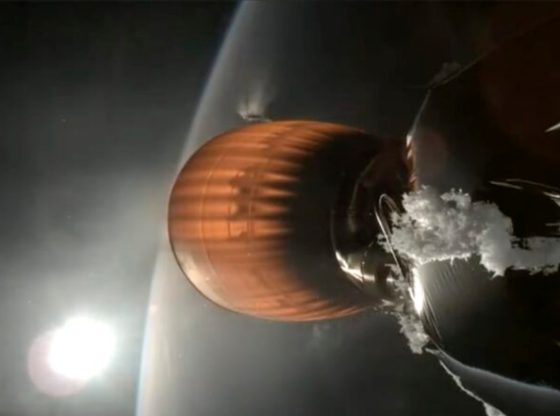

In an unexpected setback, a SpaceX Falcon 9 rocket malfunctioned on Thursday, leaving 20 Starlink satellites in a dangerously low orbit. This marks SpaceX’s first rocket failure in nearly a decade.
The launch, which took place in California, experienced an upper stage engine malfunction due to a liquid oxygen leak. This issue arose several minutes into the flight. Although SpaceX’s flight controllers managed to contact half of the satellites and tried to elevate them using onboard ion thrusters, the satellites’ low orbit—only 84 miles (135 kilometers) above Earth—proved too challenging to rectify. Consequently, the satellites are expected to reenter the atmosphere and burn up. The exact timing of this reentry remains uncertain.
With over 6,000 Starlink satellites currently providing global internet service, this incident has raised concerns about future launches. The Federal Aviation Administration (FAA) has mandated that the malfunction be resolved before Falcon rockets can fly again.
The potential impact on upcoming crewed missions is not yet known. A high-profile private spaceflight led by entrepreneur Jared Isaacman is slated for July 31, followed by a NASA astronaut mission to the International Space Station in mid-August. Isaacman, while expressing confidence in Falcon 9’s track record and its emergency escape system, acknowledged the seriousness of the recent failure.
SpaceX CEO Elon Musk emphasized that the frequent launches of Falcon 9 rockets would facilitate the quick identification and resolution of the issue. The last significant failure for SpaceX occurred in 2015, during a space station supply run, with another rocket explosion happening during ground testing the following year.