
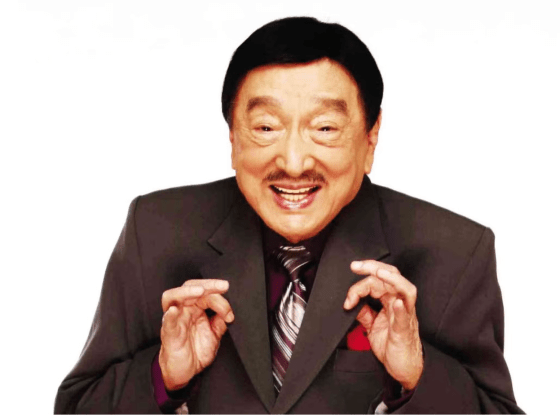


MANILA, Philippines — Decades after his passing, the indelible legacy of the country’s undisputed “King of Comedy” has taken center stage once again, reigniting a passionate national conversation about his place in the pantheon of cultural icons. The premiere of a highly anticipated tribute film honoring Dolphy (Rodolfo Vera Quizon Sr.) has sparked a powerful, coordinated revival to finally secure his posthumous nomination as National Artist for Film and Broadcast Arts.
The cinematic tribute has mobilized veteran filmmakers, contemporary comedians, and multi-generational fans to challenge the institutional technicalities that have historically delayed the country’s highest artistic honor for the beloved performer.
The renewed push was triggered by the debut of a specialized biographical documentary and tribute film. The project meticulously pieces together archival footage, lost broadcast tapes, and emotional interviews from his surviving peers:
                      [ THE RE-IGNITED NATIONAL ARTIST MOVEMENT ]
                                           │
         ┌─────────────────────────────────┴─────────────────────────────────┐
         ▼                                                                   ▼
   [ THE TRIBUTE MATRIX ]                                              [ THE MOBILIZATION ]
 • **The Cultural Blueprint:** The film charts Dolphy’s legendary    • **Industry Solidarities:** Elite figures from the Film
   six-decade career, framing his comedy not just as mere slapstick, Development Council of the Philippines (FDCP) and top
   but as a vital socioeconomic mirror for ordinary Filipinos.        directors have signed petitions backing the move.
 • **The Generational Anchor:** By showcasing his iconic roles,     • **The Fan Outpour:** The theatrical release has generated
   the film demonstrates how Dolphy single-handedly shaped the        massive traction across digital entertainment platforms,
   evolution of local television, theater, and cinema.                transforming nostalgia into an active civic campaign.
Despite his undisputed status as a pillar of Philippine pop culture, Dolphy’s path to the official Title of National Artist (Orden ng mga Pambansang Alagad ng Sining) has been famously stalled by institutional gatekeeping and administrative timelines:
[ THE STATE RECOGNITION BLOCKADES ] │ ▼[ The Elitist Slapstick Bias ] ──► Historically, traditionalist sectors within the vetting committees have favored high-brow dramatic actors and classical directors, occasionally looking down on mass-market comedy as a lesser art form. │ ▼[ The Posthumous Pipeline ] ──► Following his passing in 2012, nominations must navigate a rigid, multi-tiered selection process held only once every three years by the NCCA and the CCP. │ ▼[ The Executive Discretion Check ]──► The final roster requires Malacañang's seal. Past administrations have occasionally altered the final lists, leading to intense political and artistic controversies.
The tribute film effectively argues that a National Artist title doesn’t define Dolphy’s greatness—rather, the award itself risks losing relevance if it continues to exclude the very man who defined Philippine entertainment for generations.
| Artistic Evaluation Layer | The Institutional Skeptic’s View | The Industry and Public Consensus |
| Artistic Depth | Comedy is often categorized as purely commercial, temporary entertainment designed for quick box-office returns. | Dolphy’s characters gave a dignified voice to the working-class struggle, offering collective emotional healing through decades of national crises. |
| Industry Influence | The honor should be strictly reserved for avant-garde creators who fundamentally broke global cinematic ground. | He built the literal infrastructure of local TV and film comedy, mentoring generations of actors and technicians who run the industry today. |
| Socio-Political Impact | Awards should remain completely insulated from mass public emotion and sentimental campaigns. | The highest state award is meant to honor artists who embody the soul of the nation—a criteria Dolphy fulfilled entirely during his lifetime. |
Advocates of the movement emphasize that the current cultural renaissance surrounding the tribute film presents the perfect window for the National Commission for Culture and the Arts (NCCA) and the Cultural Center of the Philippines (CCP) to right a historical omission in the upcoming selection cycle. As the documentary moves from prestigious film festivals to nationwide screens, it delivers a loud, clear message to state cultural planners: with or without a formal decree, Dolphy remains permanently crowned in the hearts of his countrymen, but it is high time the state honors its debt to the man who spent his entire life making a nation smile.