
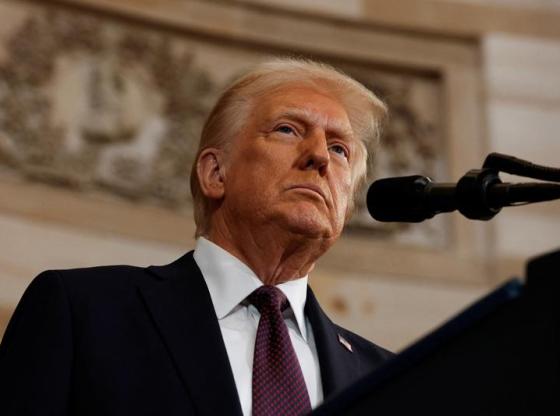

President Donald Trump has once again withdrawn the United States from the Paris climate agreement, marking the second time in a decade that the US has exited the global accord to combat climate change.
The withdrawal leaves the US, the world’s largest historic emitter of greenhouse gases, alongside countries like Iran, Libya, and Yemen as non-participants in the 2015 pact. The agreement aims to limit global temperature increases to 1.5°C above pre-industrial levels to avoid severe climate impacts.
Speaking at the Capital One Arena in Washington, Trump signed the executive order to exit the pact, calling it an “unfair, one-sided rip-off.” He reiterated his skepticism of climate change, describing it as a hoax, and justified the move as a means to free the US oil and gas industries from restrictive regulations.
Global and Domestic Reactions
UN Secretary-General Antonio Guterres expressed disappointment but remained hopeful that US cities, states, and businesses would continue pursuing low-carbon growth. “It is crucial that the United States remains a leader on environmental issues,” his office said in a statement.
Former climate negotiator Paul Watkinson warned that the withdrawal could significantly hinder global climate efforts. He noted that nations are already struggling to cut emissions, with global warming on track to exceed 3°C by the end of the century—posing catastrophic risks such as rising sea levels, heatwaves, and stronger storms.
A Second Exit, New Challenges
This marks Trump’s second withdrawal from the Paris deal; his first exit in 2017 was overturned by President Joe Biden in 2021. However, this time, the withdrawal process could be expedited, taking as little as a year.
The decision also contrasts sharply with Biden’s approach, which prioritized transitioning away from fossil fuels through subsidies and regulations to foster clean energy industries. Trump argues that his approach will boost the economy and ensure clean air and water domestically, though critics warn it could weaken the US position in the growing global clean energy market.
Li Shuo, a climate diplomacy expert, cautioned that the US exit might allow China to dominate clean energy markets like solar power and electric vehicles. “China stands to win, and the US risks lagging further behind,” he said.
The United States will formally notify the UN of its withdrawal, which will take effect in one year.