
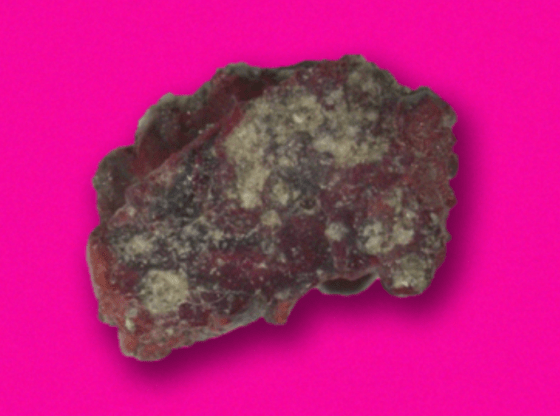

In a groundbreaking discovery at the site of the first nuclear bomb test in New Mexico, scientists unearthed a quasicrystal, a rare form of matter, showcasing a structure vastly different from conventional crystals such as table salt and diamonds. This quasicrystal, discovered decades after the 1945 test, is characterized by a non-repeating atomic pattern, defying previous assumptions about crystal formation.
The quasicrystal, named red trinitite, contains a unique 20-sided grain composed of iron, calcium, copper, and silicon, with a five-fold rotational symmetry, previously deemed impossible in standard crystals. This discovery challenges the understanding of matter formation under extreme conditions, such as those experienced during a nuclear explosion. It opens up new avenues for understanding quasicrystals on Earth and their potential applications.
In a broader context, the pursuit of novel materials extends beyond accidental discoveries like quasicrystals. Researchers like Karen Wooley are innovatively using natural resources and waste products, such as the byproducts of black soldier flies, to develop biodegradable plastics, highlighting the endless potential of scientific exploration and sustainable development.