
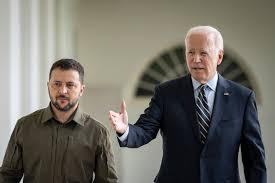

In a major shift in policy, President Joe Biden’s administration has authorized Ukraine to use US-made weapons to strike deep into Russian territory, according to US officials and sources familiar with the decision.
The move comes as Ukraine plans its first long-range strikes using US-provided ATACMS rockets, which have a range of up to 190 miles (306 km). Operational details remain undisclosed due to security concerns, but the strikes are expected to commence in the coming days.
Strategic Shift Amid Rising Tensions
The decision marks a significant escalation in Washington’s stance on the Russia-Ukraine conflict, particularly as Russian forces gain momentum and reports confirm the deployment of over 10,000 North Korean soldiers to assist Russia.
“This is a response to North Korea’s involvement and Russia’s increased aggression,” said Poland’s Foreign Minister Radoslaw Sikorski.
Ukrainian President Volodymyr Zelenskiy, in his evening address, refrained from confirming details but remarked, “The missiles will speak for themselves. Strikes are not made with words.”
The White House and State Department declined to comment on the development.
Mixed Reactions and Global Concerns
While Ukraine and its allies see this as a necessary step to level the playing field, the Kremlin has warned that such actions could escalate the conflict dangerously.
Vladimir Dzhabarov, deputy head of Russia’s international affairs committee, cautioned that this decision could lead to “World War Three.” Similarly, senior Russian official Andrei Klishas stated on Telegram, “The West’s escalation risks reducing Ukraine to ruins by morning.”
Domestically, the decision has received mixed reactions. Republican US Representative Mike Turner welcomed the move as overdue but criticized remaining restrictions, while former President-elect Donald Trump’s adviser, Richard Grenell, called it unnecessary escalation.
Implications for the Biden-Trump Transition
Biden’s administration is using its final months to bolster Ukraine’s military capabilities before President-elect Trump, who has been critical of US aid to Ukraine, takes office on January 20. Trump has promised to end the war quickly but has not outlined specific steps.
“Removing targeting restrictions will allow Ukrainians to stop fighting with one hand tied behind their back,” said Alex Plitsas of the Atlantic Council, though he noted the move might be “too late” given Russia’s recent advances.
Aiming for Negotiation Power
Despite initial reluctance to permit strikes deep into Russia due to fears of provoking retaliation or nuclear conflict, Biden’s administration now views the decision as a way to strengthen Ukraine’s position in potential ceasefire negotiations.
As Ukraine gears up for its long-range operations, the global community watches closely, with concerns over how this new chapter might shape the future of the Russia-Ukraine conflict.