
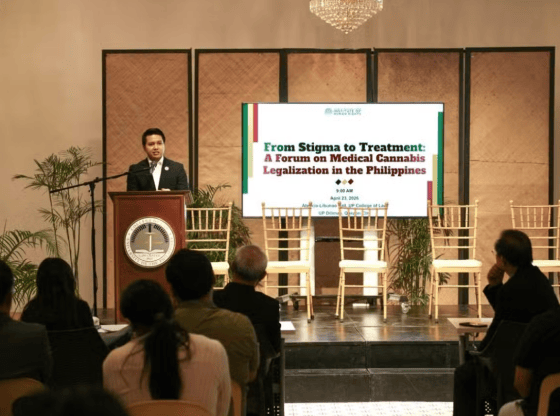

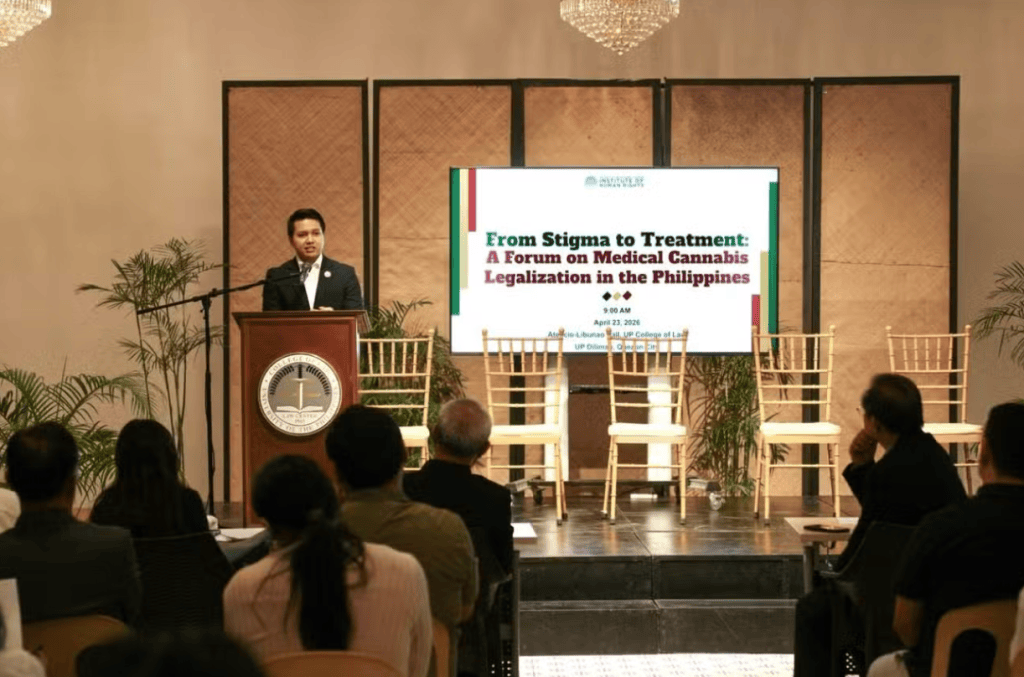
QUEZON CITY, Philippines — House Assistant Majority Leader Brian Poe has called for the establishment of a disciplined, evidence-based legal framework for medical cannabis in the Philippines. Speaking at a forum titled “From Stigma to Treatment” at the University of the Philippines (UP) College of Law on Thursday, April 23, 2026, the FPJ Panday Bayanihan party-list representative emphasized that the country must prioritize patient safety and robust regulation over rushed liberalization.
Poe stressed that the goal is to provide compassionate medical care while ensuring that no loopholes exist for recreational misuse.
Representative Poe outlined a “phased approach” to legalization, focusing on high-level safeguards:
- International Learning: Poe cited models from Germany, Israel, and Thailand, urging the Philippines to adopt their successes while avoiding the regulatory gaps seen in more rapid rollouts.
- Seed-to-Sale Tracking: A primary requirement for the law would be a strictly monitored supply chain—from cultivation to dispensing—to prevent diversion to the black market.
- Affordability and Access: The framework aims to ensure that medical cannabis is accessible and affordable for patients with debilitating conditions, rather than becoming a luxury commodity.
- Ownership Transparency: Any entity involved in the production of medical cannabis must adhere to strict transparency regarding ownership and operation.
Poe was explicit in distinguishing the current legislative push from recreational legalization:
- Strictly Medical: The proposals aim to establish a regulated pathway under Republic Act No. 9165 (The Comprehensive Dangerous Drugs Act of 2002).
- Consolidated Bills: Seven separate House bills are currently being merged into a single, unified framework to ensure legislative consistency.
- Disciplined Progress: Poe argued that “moving loosely” and passing a weak law would be a worse outcome than moving slowly to ensure the system is unshakeable.
The forum, organized by the UP Law Center Institute of Human Rights, saw strong support from various sectors:
- Patient Rights: Lea Fullon of the Haraya Policy Center argued that a legal framework is necessary to recognize that “a plant is not a threat to public order” and to protect the citizens’ right to health autonomy.
- State Obligation: Glenda Litong, a law reform specialist, noted that the state has a “positive obligation” to provide healthcare options, including the regulation of medical cannabis.
- Cautious Optimism: Dr. Donnabel Trias-Cunanan, President of Cannahopefuls, expressed confidence in the “small steps” approach advocated by Poe, focusing on gradual integration.
As the bill moves toward consolidation, Rep. Poe called on academic and scientific institutions to provide the data necessary to refine the regulatory structure. He reiterated that the task of Congress is to design a system that bridges the gap between compassion and control.
“The worst outcome is not that Congress moves slowly. The worst outcome is that Congress moves loosely, passes a weak law, and calls that progress.”