
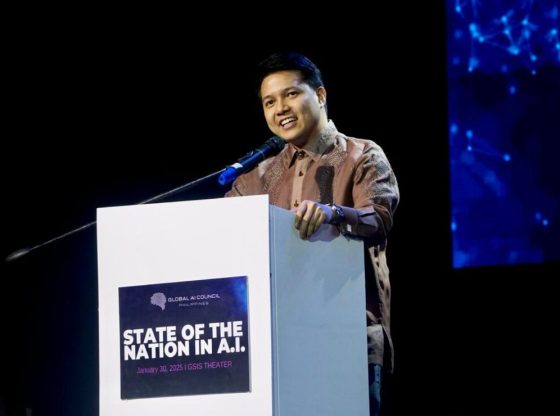

Representative Brian Poe has filed the Philippine Artificial Intelligence Governance Act, a groundbreaking bill designed to regulate the use of AI across key sectors in the country while promoting innovation and safeguarding public interest.
Recognizing the growing influence of AI on society, Poe’s proposed legislation outlines a comprehensive framework to ensure its ethical and responsible deployment, especially in sensitive fields such as healthcare, law enforcement, and education.
At the heart of the bill is the creation of the Artificial Intelligence Development Authority (AIDA), an agency under the Department of Science and Technology (DOST). AIDA will spearhead the implementation of a National AI Strategy, coordinate inter-agency efforts, and oversee compliance with the new rules.
Inspired by European models, the bill introduces a tiered risk-based classification system for AI technologies:
- Unacceptable risks (e.g., social scoring, unchecked facial recognition) will be prohibited.
- High-risk systems will undergo stringent scrutiny, especially in public safety and law enforcement.
- Limited risk applications must adhere to transparency and disclosure guidelines.
- Minimal risk uses will have fewer restrictions to encourage innovation.
The proposed act also promotes core AI governance principles—transparency, data protection, human oversight, and clear technical documentation. A regulatory sandbox will allow emerging technologies to be tested safely before full deployment.
International cooperation is also a key component. The bill aims to align Philippine AI policies with global standards, facilitating partnerships and cross-border governance.
For General-Purpose AI (GPAI), the bill sets specific obligations: transparent data use, full documentation, protection of IP rights, and traceable outputs.
“Our main goal with this bill is to protect the rights of Filipinos while fostering innovation,” Poe emphasized. “We want a balanced approach—one that ensures AI serves the people and drives responsible progress.”
If enacted, the Philippine Artificial Intelligence Governance Act could place the country at the forefront of ethical and forward-thinking AI governance in Southeast Asia.