
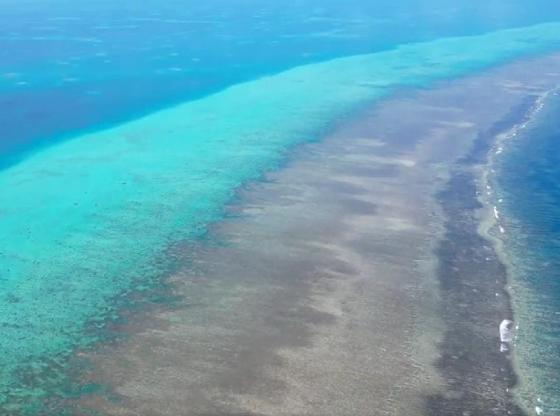

China’s coast guard patrolled the Scarborough Shoal on December 27, asserting its territorial claims in the South China Sea, Chinese state media reported. The China Coast Guard (CCG) has reportedly intensified law enforcement activities around the shoal since early December.
Scarborough Shoal, also known as Bajo de Masinloc in the Philippines, lies 124 nautical miles off Masinloc, Zambales, within the Philippines’ 200-nautical mile exclusive economic zone (EEZ), as defined by the 1982 United Nations Convention on the Law of the Sea (UNCLOS).
Philippine Sovereignty Affirmed
The Philippine Mission to the United Nations, led by Ambassador Antonio Lagdameo, has reiterated the country’s claim over the shoal, citing the binding 2016 Arbitral Award issued by the Hague-based Permanent Court of Arbitration. The ruling declared Scarborough Shoal a high-tide feature but clarified it does not generate its own EEZ or continental shelf.
China has rejected this ruling, asserting its claims over the shoal, which it calls “Huangyan Dao.” In December, Beijing submitted a statement to the UN that included a chart claiming Scarborough Shoal as part of its territorial waters.
Incidents in the Vicinity
- On December 19, the Philippine Coast Guard (PCG) monitored 12 Chinese vessels near Bajo de Masinloc and distributed supplies to Filipino fishermen in the area.
- On December 20, China alleged that a Philippine aircraft entered what it claimed as Chinese airspace over the shoal.
- The PCG disputed these claims on December 21, stating that Philippine aircraft and vessels voluntarily left the area after completing legitimate patrols.
Commodore Jay Tarriela, PCG spokesperson for the West Philippine Sea, emphasized the patrols aim to ensure the safety of Filipino fishermen and secure Philippine waters.
Resource-Rich Waters
Scarborough Shoal, a triangular coral reef with a lagoon, is famed for its marine biodiversity and rich fishing grounds. The shoal remains a flashpoint in the broader dispute over the South China Sea, a region of strategic importance and contested claims.
As tensions persist, the Philippines continues to call for adherence to international law, including UNCLOS and the 2016 Arbitral Award, to resolve disputes and safeguard its sovereignty.