
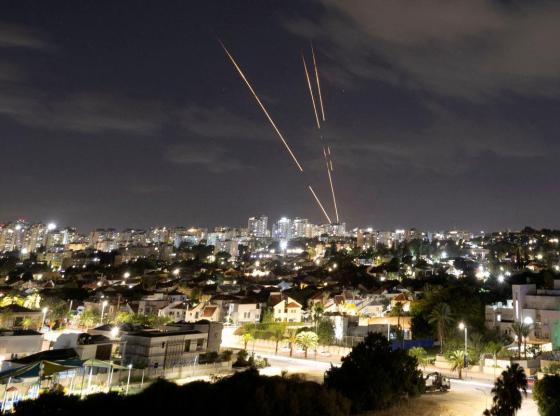

Iran announced on Wednesday that its missile attack on Israel, the largest it has ever conducted against the country, is over unless further provoked. This follows Israel’s military actions against Iran’s Hezbollah allies in Lebanon. However, Israel and the United States have vowed to retaliate, raising concerns of a broader conflict.
Despite global calls for a ceasefire, fighting between Israel and Hezbollah continued, with Israel launching airstrikes on Hezbollah targets in Beirut’s southern suburbs. Hezbollah claimed to have repelled Israeli forces attempting to infiltrate a Lebanese town.
Iran described its missile strike as a defensive move, targeting three Israeli military bases in response to Israel’s actions in Lebanon and Gaza. Iranian Foreign Minister Abbas Araqchi stated, “Our action is concluded unless the Israeli regime decides to invite further retaliation.”
Israeli Prime Minister Benjamin Netanyahu warned that Iran would pay for its attack, which involved over 180 ballistic missiles. The U.S. pledged “severe consequences” for Iran, with U.S. Navy warships intercepting some of the missiles.
Iran’s use of hypersonic missiles marks a significant escalation, with Iranian forces claiming that 90% of the missiles successfully hit their targets. The conflict’s intensity has raised fears of a regional war, especially given Israel’s ongoing ground operations in Lebanon and its year-long conflict in Gaza.
The United Nations Security Council and the European Union are calling for an immediate ceasefire, while U.S. and Israeli leaders continue to promise retaliation.