

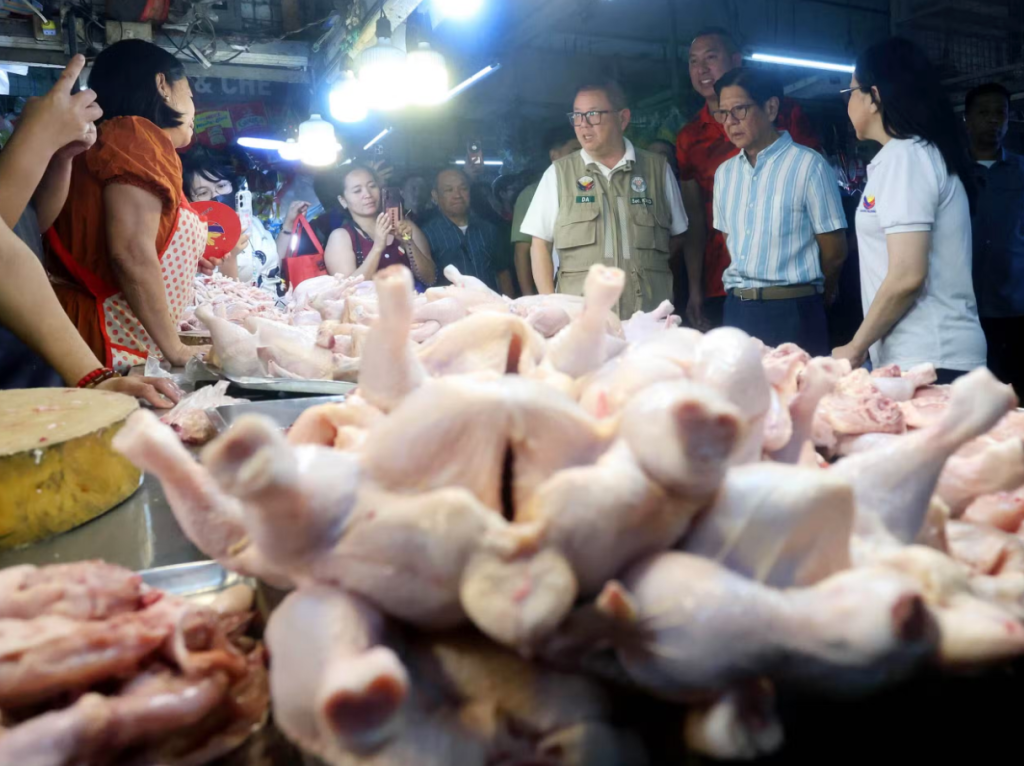
MANILA, Philippines — Amid growing concerns over the “Third Wave” of global economic fallout from the Middle East conflict, President Ferdinand “Bongbong” Marcos Jr. has issued a calming message to the Filipino public, asserting that domestic commodity prices remain stable and that there is absolutely no need for panic buying or hoarding.
The President’s statement follows reports of localized “supply anxiety” in Metro Manila and neighboring provinces, sparked by the ongoing transport strikes and the recent “diesel double whammy” affecting logistics. President Marcos emphasized that the government’s strategic interventions—including the deferment of fare hikes and the acceleration of agricultural fuel subsidies—are designed specifically to absorb these external shocks without passing the burden to the kitchen table.
“I want to reassure our countrymen: our supply chains for rice, sugar, and basic necessities are intact,” the President stated during an inspection of a government storage facility. “We are monitoring the markets daily. Prices are holding steady at normal levels. Hoarding only creates artificial scarcity and hurts your fellow Filipinos. There is enough for everyone.”
The administration’s “Price Guard” strategy for the second quarter of 2026 includes several pillars of market stability:
- Expanded Kadiwa Centers: The Department of Agriculture (DA) is doubling the number of Kadiwa pop-up markets to provide direct-from-farmer produce at non-inflationary prices, bypassing the high transport costs currently affecting commercial retailers.
- Strategic Buffer Stocks: As oil firms rush to build a bigger fuel buffer, the National Food Authority (NFA) has also confirmed that rice buffer stocks are at a comfortable 90-day level, providing a significant cushion as the country enters the dry season.
- Anti-Hoarding Task Force: The Department of Trade and Industry (DTI) has been directed to intensify “Oplan Bantay Presyo,” with stricter penalties for retailers found to be concealing inventory or engaging in “price-gouging” during the international crisis.
- Logistics Subsidies: By providing fuel vouchers to transport cooperatives, the government is ensuring that the “middle-mile” delivery of goods remains affordable, preventing a spike in the retail price of canned goods and construction materials.
The President noted that while the weakening of the Amihan (Northeast Monsoon) brings higher temperatures, it also marks the start of the summer harvest in several regions, which typically increases the local supply of fruits and vegetables. He urged the public to ignore “fake news” regarding imminent shortages, noting that the House of Representatives, under Speaker Inno Dy V, is currently working on supplemental measures to keep the “Creative Economy” and agriculture sectors afloat during the recess.
“We are in control of the situation,” Marcos added. “Whether it’s the ₱1.8-billion Isabela Solar Park stabilizing our energy grid or our diplomats courting Chinese EV makers to lower transport costs, every move we make is aimed at keeping life affordable for the average family.”
As the Holy Week rush approaches and the DPWH accelerates repairs on Andaya Highway, the government expects a smooth flow of goods and people, further stabilizing market sentiment. For now, the message from Malacañang is clear: stay calm, buy only what you need, and trust in the resilience of the local economy.