

In a breakthrough moment for space exploration, scientists using the James Webb Space Telescope have discovered what could be the most convincing evidence yet of life beyond Earth. They detected gases in the atmosphere of exoplanet K2-18 b—dimethyl sulfide (DMS) and dimethyl disulfide (DMDS)—that, on Earth, are produced only by living organisms, particularly marine microbes like phytoplankton.
The research team, led by astrophysicist Nikku Madhusudhan from the University of Cambridge, emphasized that while this isn’t direct proof of alien life, the findings represent a strong potential biosignature—evidence of biological activity.
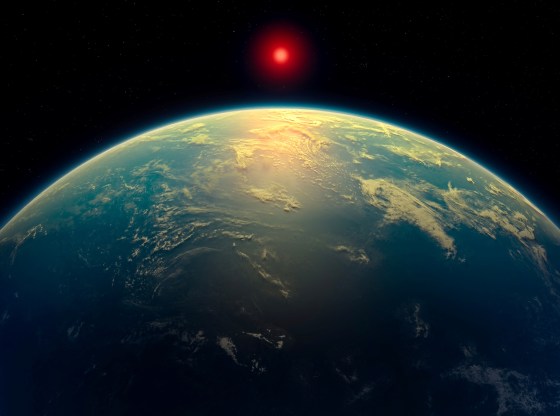
K2-18 b, about 124 light-years away in the constellation Leo, is located in the habitable zone of its red dwarf star. It’s considered a “hycean world”—an exoplanet thought to be covered by a warm water ocean and enveloped in a hydrogen-rich atmosphere, ideal conditions for microbial life.
The presence of these gases was measured at concentrations thousands of times higher than on Earth, making it hard to explain without biological activity, according to Madhusudhan. However, he cautioned that more observations and theoretical studies are needed to rule out non-biological explanations.
This planet belongs to the “sub-Neptune” class—larger than Earth but smaller than Neptune. Its atmospheric composition was analyzed through the transit method, where light from its star passes through the planet’s atmosphere, revealing chemical signatures.
While it’s too early to make definitive claims, the researchers believe we may be getting closer than ever to answering one of humanity’s oldest questions: Are we alone?