
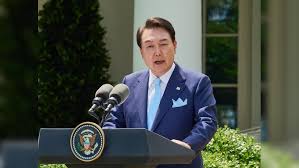

SEOUL – South Korean President Yoon Suk Yeol declared on Saturday his intention to battle for his political future following his impeachment in a second parliamentary vote. The opposition-led parliament took action against Yoon over his controversial attempt to impose martial law earlier this month, a decision that stunned the nation.
The Constitutional Court will determine within six months whether Yoon will be permanently removed from office. If the court upholds the impeachment, a snap election will be triggered.
In the meantime, Prime Minister Han Duck-soo, Yoon’s appointee, has assumed the role of acting president, with Yoon suspended from his presidential duties halfway through his five-year term.
“I will put all my energy into maintaining stability in the government,” Han reassured reporters following Yoon’s impeachment.
This marks the second time a conservative South Korean president has faced impeachment. Yoon follows in the footsteps of Park Geun-hye, who was ousted from office in 2017.
Yoon’s Defiance Amid Growing Challenges
Yoon, known for his resilience in the political arena, remains undeterred despite mounting scandals, internal party divisions, and resistance from an emboldened opposition.
“Although I must pause now, the journey I have shared with the people toward a better future must not stop. I will never surrender,” Yoon proclaimed in a defiant address.
Protests erupted across the nation as news of the impeachment broke. Jubilant demonstrators waving LED lights celebrated near parliament, while a rival rally of Yoon supporters dispersed quickly after the announcement.
Opposition Democratic Party leader Lee Jae-myung addressed an elated crowd outside the assembly, urging citizens to push for Yoon’s swift removal. “You, the people, made this happen. You are creating a new chapter in history,” he said.
Impeachment Process and Fallout
The impeachment motion succeeded with 204 lawmakers voting in favor, surpassing the required two-thirds majority in the 300-seat parliament. Notably, at least 12 members of Yoon’s own People Power Party joined the opposition in backing the motion.
The crisis began on December 3, when Yoon granted the military sweeping emergency powers to confront what he described as “anti-state forces.” The decree, seen as an unconstitutional overreach, was revoked just six hours later after parliament and public backlash. The move left South Korea in turmoil, prompting accusations that Yoon violated the law and calls for his resignation.
Yoon later issued a national apology but continued to defend his actions, arguing that the martial law decree was necessary to address political deadlock and safeguard democracy.
In addition to impeachment, Yoon faces a criminal investigation for alleged insurrection tied to the martial law declaration. Authorities have also barred him from traveling abroad.
Despite these challenges, Yoon reiterated his resolve in a fiery speech on Thursday, vowing to “fight until the end” and insisting his actions were in the nation’s best interest.