
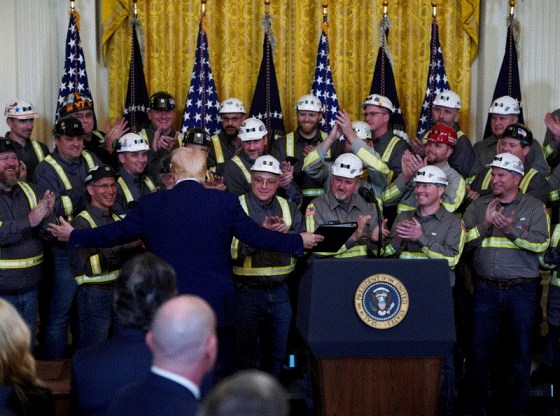

President Donald Trump has signed a set of executive orders aimed at reviving the U.S. coal industry, a move that runs counter to ongoing global efforts to reduce carbon emissions and shift to cleaner energy.
Speaking at the White House on April 8, Trump stood alongside coal miners and declared, “We’re bringing back an industry that was abandoned. We’re going to put the miners back to work.” The coal workforce has dropped from around 70,000 a decade ago to about 40,000 today.
Although coal now generates less than 20% of U.S. electricity—down from 50% in 2000—Trump is seeking to reverse the trend amid rising electricity demand fueled by AI data centers, electric vehicles, and cryptocurrencies.
Among the key measures, Trump invoked the 1950 Defense Production Act to support coal production and directed the Department of Energy to consider designating metallurgical coal (used in steelmaking) as a “critical mineral.” This could potentially unlock emergency powers to boost its production.
He also instructed the Interior Department to formally end a moratorium on new coal leases on federal land and prioritize coal leasing to private companies.
Shares in top coal producers like Peabody and Core Natural Resources surged by 9% following the announcement.
Despite the aggressive push, it remains uncertain whether demand will follow, given the widespread shutdown of coal plants due to lower-cost natural gas, clean energy alternatives, and regulatory pressures.
Supporters argue that deregulation could restore coal’s role in making the grid more reliable. However, environmental advocates slammed the move as a step backward, calling coal “outdated, uncompetitive, and dirty.”
“The Trump administration is stuck in the past,” said Kit Kennedy of the Natural Resources Defense Council. “Instead of propping up coal, it should be investing in a future-ready energy grid.”