
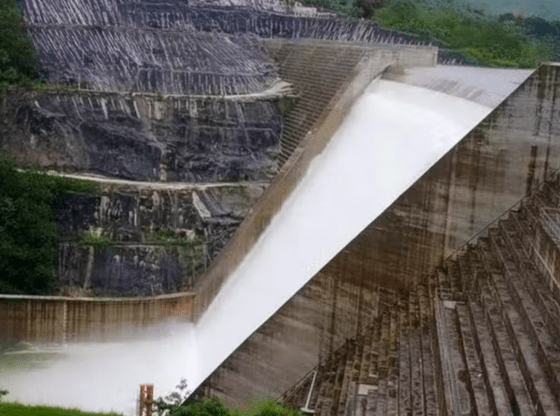


RODOLFO VILLANUEVA, Rizal – Amid the fury of Typhoon Uwan that battered Luzon last month, the Upper Wawa Dam stood as a steadfast guardian, slashing downstream flooding by an astonishing 99.5% in key Rizal communities and reaffirming its dual role as a vital water lifeline and disaster shield. Operated by Manila Water’s subsidiary WawaJVCo, the P8.5-billion behemoth – the largest new raw water source in over half a century – absorbed 33.7 million cubic meters of rainwater in just 30 hours, sparing areas like Montalban, San Mateo, and Antipolo from the deluge that could have overwhelmed homes and farmlands.
The dam’s heroics weren’t luck but engineering excellence. With a sprawling 262-square-kilometer watershed catchment – that’s 26,200 hectares of lush terrain feeding its 120-million-cubic-meter reservoir – it handled a staggering 10-meter rise in water levels fueled by 110 mm of rainfall at the site. “The Upper Wawa Dam is more than just a water source but a lifeline for communities downstream,” beamed WawaJVCo General Manager Joe Costales, crediting innovative features like a stepped chute and stilling basin that tamed the torrent’s turbulence, curbing erosion and flood risks. Built to rigorous standards from the International Commission on Large Dams (ICOLD) and the U.S. Army Corps of Engineers (USACE), it’s quake-proof and flood-resilient, ensuring it bends but never breaks under nature’s wrath.
For the 3.5 million Filipinos it serves – that’s over 700,000 households across Metro Manila and Rizal – the dam’s daily output of up to 710 million liters underscores its quiet revolution in water security. Montalban Mayor Ronnie Evangelista couldn’t praise it enough: “It’s a game-changer for Rizal. It not only secures water for our growing population but also provides a strong defense against flooding. This is a testament to how infrastructure can serve both development and disaster resilience.” In a province still scarred by Typhoon Carina’s 2024 rampage, the dam’s performance during Uwan feels like a hard-won victory, a buffer against the monsoons that have long menaced the lowlands.
Yet, as Rizal licks its wounds, the Upper Wawa’s success spotlights a broader blueprint: In an archipelago where climate change cranks up the storm dial, such feats aren’t just feats – they’re futures forged in concrete and foresight. As Costales put it, the dam isn’t just holding water; it’s holding hope, one resilient drop at a time.