
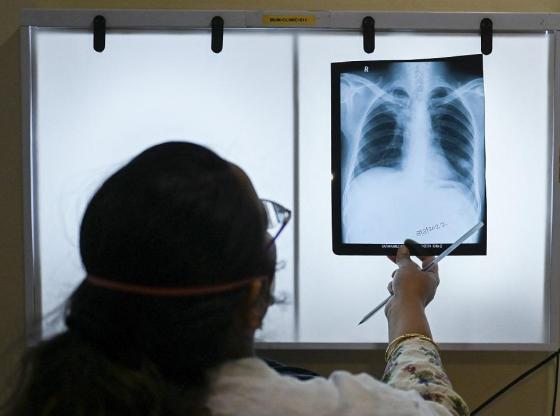

The World Health Organization (WHO) has reported a record-breaking 8.2 million new tuberculosis (TB) cases diagnosed globally in 2023—the highest since global TB monitoring began in 1995. Despite a slight decline in TB-related deaths, from 1.32 million in 2022 to 1.25 million last year, the increase in diagnosed cases underscores significant challenges in combating the disease, including substantial underfunding.
WHO’s 2024 Global Tuberculosis Report estimates that an additional 10.8 million people may have contracted TB in 2023, highlighting gaps in diagnosis. “The fact that TB still kills and sickens so many people is an outrage when we have the tools to prevent, detect, and treat it,” stated WHO Director-General Tedros Adhanom Ghebreyesus. WHO is urging countries to fulfill their commitments to enhance TB detection and treatment efforts.
The increase in cases is partly attributed to population growth, with TB incidence rising to 134 cases per 100,000 people, a 0.2% uptick from 2022. The report emphasizes that TB disproportionately affects 30 high-burden countries, with India, Indonesia, China, the Philippines, and Pakistan accounting for over half of all cases globally.
Preventable and treatable, TB primarily affects the lungs and spreads through the air via coughing or sneezing. However, major risk factors—including undernutrition, HIV, alcohol use disorders, diabetes, and smoking—continue to drive new infections, especially in vulnerable populations.
Despite global targets to curb TB, progress remains “off-track,” WHO warns. Funding for TB prevention and care remains critically low, with only $5.7 billion available of the $22 billion needed annually. As a result, TB has likely returned as the leading cause of death from a single infectious agent, surpassing COVID-19 after three years.